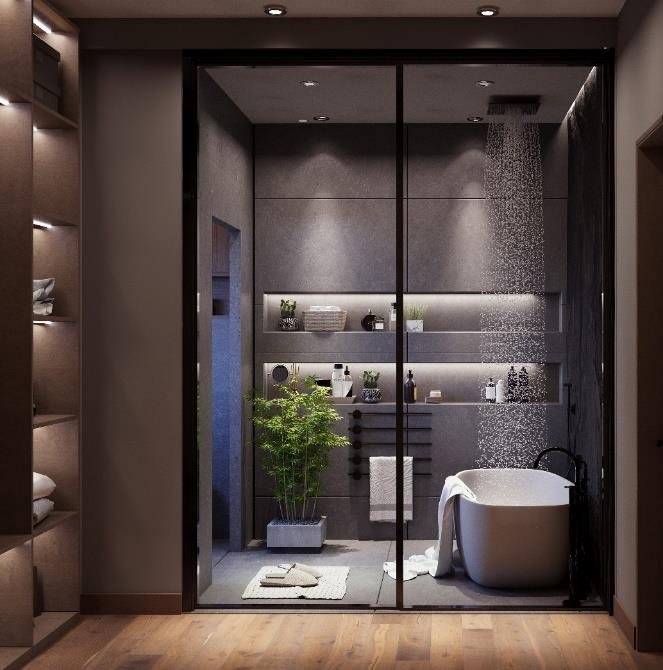
A year into a new bathroom, the shower glass has a permanent haze that no cleaning removes, the tap has white crust around its base, and the rainfall shower head sprays in several directions at once. The usual conclusion is that the fittings were poor quality. Often they were fine, and the water was the problem nobody specified for.
Water across much of Cairo carries a high mineral load. That deposits on every surface it dries on, and once it has bonded to a porous or delicate finish it is no longer a cleaning matter.
What Hard Water Actually Damages
- Shower glass, where deposits etch into the surface permanently if left
- Tap and shower aerators, which block and distort the spray
- Water heaters and mixer cartridges, where scale shortens life considerably
- Polished and living finishes, which lose their surface to repeated acidic cleaning
- Natural stone in wet areas, which is damaged by the descalers used on the fittings around it
Finishes That Survive, and Finishes That Do Not
The finish matters more than the brand, and this is where most of the money is saved or lost.
- Chrome, which is the most practical choice in hard water, hard wearing and tolerant of cleaning
- Physical vapour deposition coatings in brushed brass or black, which hold up far better than lacquered or painted equivalents
- Avoid lacquered brass and painted finishes, where descaling removes the coating along with the scale
- Avoid deeply textured or hammered surfaces, which trap deposits in every crevice
- Brushed rather than polished, since brushed finishes disguise marking dramatically better
In Cairo water, the finish decides how a bathroom looks in three years far more than the brand on the tap.

Glass Is Worth a Separate Decision
Shower glass is the surface that shows damage first and recovers least. A factory applied protective coating, specified with the glass rather than added later, keeps deposits on the surface where they wipe off instead of bonding into it. Combined with a squeegee kept in the shower, it is the difference between glass that stays clear for years and glass that is permanently clouded by the second summer.
The Fit Out Decision: Treating the Water
The most complete answer is treating the water before it reaches anything. An inlet filter with a scale inhibitor protects every fitting, the heater and the washing machine at once, and a softener does more again. Both need space, a drain and access for servicing, which means they belong in the plan at first fix rather than being fitted into a cupboard afterwards.
- Decide on treatment before first fix so the space and drainage exist
- Fit isolating valves to everything, so a scaled cartridge is a small job
- Choose fittings whose cartridges and aerators are available separately in Egypt
- Specify accessible service points rather than concealed ones wherever possible
Limescale and Hard Water Damage in Cairo Bathrooms
A bathroom that still looks new after several years in this water is almost always one where three decisions were made deliberately: a brushed or coated finish rather than a lacquered one, protected shower glass, and some form of treatment at the inlet. None of them is expensive at the right moment, and all of them are difficult to add later.
What Shapes the Brief for a Hard Water Bathroom
Where Your Water Comes From
In most apartments the water passes through a building tank and a pump before it reaches the tap, so what comes out depends on that system as much as on the supply to the city. Ask the building management how the water is stored and delivered, and whether any treatment already exists. The answer changes what the studio specifies, so it is worth knowing before the drawings are fixed.
How the Bathroom Is Used
A family bathroom used all day by several people is a different brief from a guest bathroom that is rarely opened. Heavy use means more water drying on more surfaces, so the finishes and any treatment should be chosen for the busiest bathroom in the home, not the quietest one.
How Much Cleaning You Will Realistically Do
Some finishes forgive a quick wipe and others demand constant attention. A good brief states the real habits of the household, including who cleans and how often, because the best specification is the one that suits the people who will actually look after it.
The Order of Decisions, So Nothing Has to Be Undone
Bathrooms are the rooms where a late decision costs the most, because everything behind the tiles is closed up once the finishes go on. The sequence below keeps the difficult choices ahead of the messy work.
Decide on Water Treatment Before the Plumbing Is Drawn
Treatment equipment needs a place, a drain and room for a technician to work. If that space is found at the start it can be hidden neatly. If it is found at the end it usually lands in a cupboard that was meant for something else.
Choose the Fittings Before the Walls Are Closed
Different fittings need concealed parts in different positions and at different depths. Choosing them early means the plumber builds the right thing the first time, and nobody has to cut back finished tiling to make a tap fit.
Daily Habits That Protect the Finish
Even the best specification lasts longer with a few small habits. None of them takes real effort, and all of them are easier when the bathroom has been planned with a place for the tools.
Simple Habits Worth Building
- Squeegee the glass after the last shower of the day so the water never dries on it
- Wipe taps and shower fittings with a soft dry cloth so no droplet is left to dry
- Use mild cleaners made for the finish, and never abrasive pads on coated or brushed surfaces
- Keep a hook or a small holder for the squeegee inside the shower so it is actually used
- Rinse the fittings well after any cleaning product so nothing is left on the surface
Use Descalers With Care
Strong acidic cleaners can damage coatings, grout and stone. Read the care instructions that come with each fitting, test on a hidden spot first, and keep descaler well away from any natural stone nearby.
Comparing Quotes Fairly
When two quotes for the same bathroom look very different, the gap is usually in what has been left out rather than in what has been offered. Protected glass, treatment equipment, access panels and isolating valves are the items that tend to disappear from the cheaper version.
Ask for the Finish by Name, Not by Colour
A fitting described as brass could be solid, coated or simply lacquered, and these age very differently in hard water. Ask the supplier to state exactly what the finish is and how it should be cleaned.
Ask Where Spare Parts Come From
A beautiful fitting with cartridges that cannot be bought locally becomes a problem the first time it scales. Ask for the cartridge and the aerator to be confirmed as available in Egypt before you order.
Lead Times and What to Prepare
Fittings, glass and special finishes are not all held in stock, so they should be ordered with the programme in mind rather than when the plumber is already waiting. The studio sets the order of deliveries so that each item arrives before the trade that needs it.
What to Gather Before the First Meeting
- Photographs of the problems in your current bathroom, such as haze on glass or crust on taps
- Any information from the building about how water is stored and treated
- A note of who uses each bathroom and how heavily
- Pictures of finishes you like, so they can be checked against your water
Frequently Asked Questions
Does limescale mean I bought poor fittings?
Not necessarily. Many good fittings struggle in hard water when the finish is delicate or the water is untreated. The finish and the treatment matter more than the brand.
Can hazy shower glass be repaired once it has etched?
Light deposits can often be cleaned with suitable products, but once the surface itself is etched, cleaning will not bring it back. Replacing it with protected glass is the lasting answer.
Do I need water treatment in an apartment?
It depends on the building and on how much you want to protect. Ask the management how the water is treated, and ask the studio to leave space and drainage so treatment can be added without breaking into finished work.
Is chrome always the safest finish?
It is the most forgiving in hard water and the easiest to clean. Good coated finishes in brushed brass or black can also work well when they are specified properly and cleaned gently.
Choose brushed or coated finishes over lacquered ones and specify protected shower glass. In Cairo water those two choices decide how a bathroom ages.
Specifying for local water is part of how Residential Interiors selects sanitary ware rather than choosing from a catalogue, as in the wet areas of Villa Basement Spa & Pool. Choosing Bathroom Materials That Still Look Good in Five Years covers the surfaces around the fittings.

Free guide
Choosing Materials That Last in a Cairo Home
Leave your details and we will email you the guide on this subject straight away.
One guide, no repeat mailings.
Your guide is on its way
Check your inbox in a few minutes. If it is not there, look in your spam folder.