Bathrooms are the most punishing rooms in a house. Constant water, steam, temperature swings, cleaning products and daily abrasion, all applied to surfaces chosen largely because they looked good in a showroom. Five years later the difference between a considered specification and an attractive one is very easy to see.
What follows is how the studio actually chooses bathroom materials, and what tends to go wrong. Material selection sits inside every residential interiors project rather than being handed to a supplier.
Natural stone: beautiful, and conditional
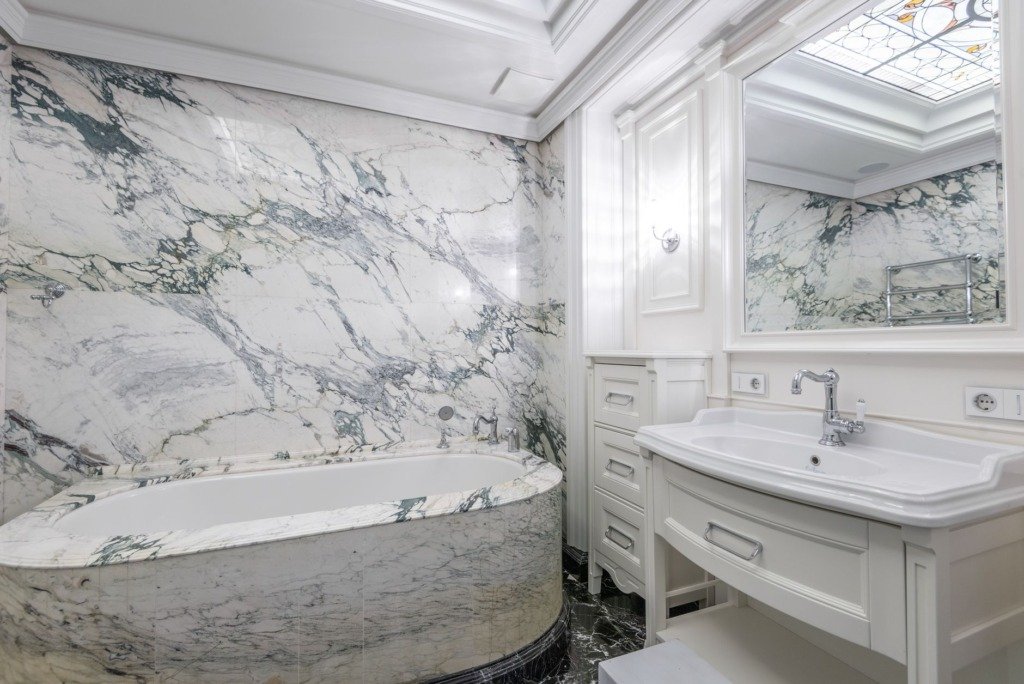
Marble is the material everyone asks for, and it can be the right answer. It is also porous, reactive to acid, and softer than most people assume.
- It will etch. Shampoo, toothpaste, citrus and limescale remover all leave dull marks on a polished surface. Honed finishes hide this far better than polished ones.
- It needs sealing. On installation and then periodically. This is maintenance, not a one-off, and the Natural Stone Institute publishes the cleaning and sealing guidance worth following.
- It has a grain. Slabs vary. Choose the actual slab, and ask for it to be book-matched if the veining is the point.
Used on a vanity top or a feature wall, marble ages into something better, which is how it is used in the bathrooms of the Lotus Villa Renovation. Used across a heavily shared family shower floor, it becomes a chore.
Porcelain has closed the gap
Large-format porcelain is now good enough that the argument for stone is aesthetic rather than practical. It is non-porous, needs no sealing, does not etch, and comes in slabs big enough to reduce grout lines to almost nothing.
The tell is repetition. Cheaper ranges use three or four printed faces, so the same veining recurs across a wall and the eye picks it up immediately. Better ranges use dozens of variations. Ask how many faces are in the range before specifying it.
Choose the finish for where your hands and feet go, and the material for where your eyes go.
Floors: slip resistance is not optional
Polished stone or gloss porcelain on a wet bathroom floor is a genuine hazard, and it is specified constantly because it photographs well.
- Look for an R10 rating as a minimum on a bathroom floor, and R11 inside a wet room or shower
- Smaller formats inside a shower give more grout lines and therefore more grip
- Honed, textured or structured finishes are safer than polished, and hide watermarks better
Grout and silicone decide how it ages
Nothing dates a bathroom faster than discoloured grout. Two decisions prevent it.
First, use an epoxy grout in wet areas, graded against the Tile Council of North America classes rather than by name alone. It costs more and takes longer to install, and it does not stain or harbour mould the way cement grout does. Second, choose a grout tone close to the tile rather than a contrast, so that any variation over time is invisible instead of graphic.
Silicone is a consumable. Plan on replacing it every few years and it will never be a problem.
What Changes the Bathroom Brief
Who uses the room
A guest bathroom used occasionally can carry delicate finishes that a busy family bathroom cannot. Children, older relatives and shared use all change the choice of floor, the height of fittings and how much maintenance is realistic.
Water quality
Hard water leaves limescale on glass, taps and dark finishes, and softer water is gentler on everything. If the water in your area is hard, choose finishes that tolerate it, and consider a filter at the supply.
Existing plumbing
Moving a toilet, shower or drain is the single biggest factor in how involved a bathroom becomes. Keeping the services where they are leaves more of the effort for finishes, which is often where it is best spent.
The Planning Order for a Bathroom
Bathrooms hide a great deal behind the surface, so the order of decisions matters more than in most rooms.
- Settle the layout and the position of every fitting and drain.
- Choose the sanitaryware and brassware, since they fix the pipework positions.
- Confirm waterproofing, falls to the drain and the extraction route.
- Select the tile, stone and grout once the tile sizes suit the room.
- Set out the tile layout on paper so cuts fall in the least visible places.
- Choose mirrors, lighting and accessories last, but allow for their fixings in the walls.
Climate, Waterproofing and Ventilation
Waterproofing is not a finish
The layer behind the tile does the real work of keeping water out of the structure. It is covered up and forgotten, which is why it should be specified, applied properly and checked before any tile goes down.
Heat and humidity
Warm weather speeds up mould where air does not move, and a closed bathroom in a hot month can stay damp for hours. Ventilation, a window that opens where possible, and surfaces that are easy to dry all help the room stay fresh.
Comparing Quotes and Samples
Bathroom quotes vary widely because the hidden work is easy to leave out. Ask every contractor and supplier to price the same drawing and the same material schedule, and request a physical sample before you commit.
- Is waterproofing included, and which system is used.
- Which grout and adhesive are specified for the wet areas.
- Whether the tile quantity allows for cutting and spare pieces.
- Who supplies and fits the extraction, and where it is ducted.
- The lead time for tile, sanitaryware and brassware.
Working Remotely and What to Prepare
A bathroom can be specified remotely from measurements, photographs and a shortlist of finishes. Samples can be sent to you or viewed on a call, and the studio coordinates with the contractor so decisions about tile layout and fittings are made on drawings, not on site.
- Measured plans of the bathroom, including door and window positions.
- Photographs of the existing room and of the pipework if it is exposed.
- Your shortlist of tiles, fittings and any items already bought.
- A note of who uses the room and any accessibility needs.
- Building rules about works, water shut off and delivery access.
Frequently Asked Questions
Is marble a bad idea in a bathroom?
Not at all, if you accept it will age and you keep it sealed. It suits vanity tops and feature walls better than a busy shower floor.
Is porcelain as good as stone?
Practically, often better, since it does not stain or need sealing. Stone wins on character and on the feel of a unique slab.
How do I keep grout looking clean?
Choose epoxy grout in wet areas, a tone close to the tile, and ventilate the room after use. Gentle cleaners are better than harsh ones.
Can I choose finishes before the layout is final?
You can start collecting ideas, but do not order until the layout is fixed. Tile sizes and quantities depend on it.
When should materials be ordered?
As soon as the specification is agreed. Stone and imported tile often have the longest lead times, so ask for them when you choose.
Specify epoxy grout in the shower and a honed rather than polished floor finish. Those two decisions account for most of the visible difference between a five-year-old bathroom that looks cared for and one that looks tired.
We go into a related topic in more depth in Choosing Kitchen Countertops for a Cairo Climate, worth a read alongside this one.
Brassware: the finish matters more than the shape
Taps and showers are handled every day with wet hands, so the coating is doing real work.
- Chrome is the most durable and the easiest to live with. It shows watermarks and cleans instantly.
- Brushed nickel and brushed brass hide marks well and age gracefully, provided the finish is PVD rather than a lacquer.
- Matt black looks superb and shows limescale badly in hard water. Consider where the water is coming from before committing.
- Living finishes such as unlacquered brass will patinate. That is the point, but the client has to want it.
Timber, if it is detailed properly
Timber brings warmth that no tile achieves, and it survives a bathroom perfectly well when it is kept out of direct spray, sealed on all six faces including the hidden ones, and paired with real extraction. Vanity units, screens and slatted panels are all reasonable. Shower floors are not.
Extraction, again
Almost every bathroom material failure traces back to moisture that had nowhere to go. An adequately sized extract fan with a run-on timer, ducted outside rather than into a void, protects every other decision on this page.
Specifying a bathroom?
If you have a moodboard and a shortlist of tiles, that is a good moment to get a second opinion before the order goes in. Send them over and we will tell you which choices will still be working in five years.

Free guide
Choosing Materials That Last in a Cairo Home
Leave your details and we will email you the guide on this subject straight away.
One guide, no repeat mailings.
Your guide is on its way
Check your inbox in a few minutes. If it is not there, look in your spam folder.