Home gym design in a Cairo apartment runs into one problem almost immediately: impact noise. A spare room with a rack of dumbbells and a yoga mat works fine on the ground floor of a villa, but in a mid-rise compound building in New Cairo or 6th of October, a dropped kettlebell or a set of burpees at seven in the morning becomes the downstairs neighbour’s problem within a week. Getting a home gym right in an apartment means designing around that constraint from the start, not discovering it after the first complaint.
It’s a detail we address as standard whenever we take on Residential Interiors for a Cairo home.
The room itself matters less than how it’s treated. Almost any spare bedroom, study, or oversized storage room can become a functional gym with the right flooring, ventilation, and layout, the difference between a gym that gets used daily and one that becomes a laundry-drying room within a year comes down to those details, not the size of the space.
Picking the Right Room
A room away from shared walls with a neighbouring unit is the first preference, since it limits how much impact and equipment noise travels sideways as well as down. A north-facing room is worth prioritising over a south or west-facing one, since a home gym generates its own heat from activity and doesn’t need direct sun adding to it, particularly in Cairo’s summer months.
Ceiling height matters more here than in most rooms, a standard 2.7-metre apartment ceiling is fine for most equipment, but anything involving overhead movement, like a pull-up bar or an Olympic barbell held overhead, needs genuine clearance checked before the room is finalised.
Home Gym Design in a Cairo Apartment: Flooring and Sound Come First
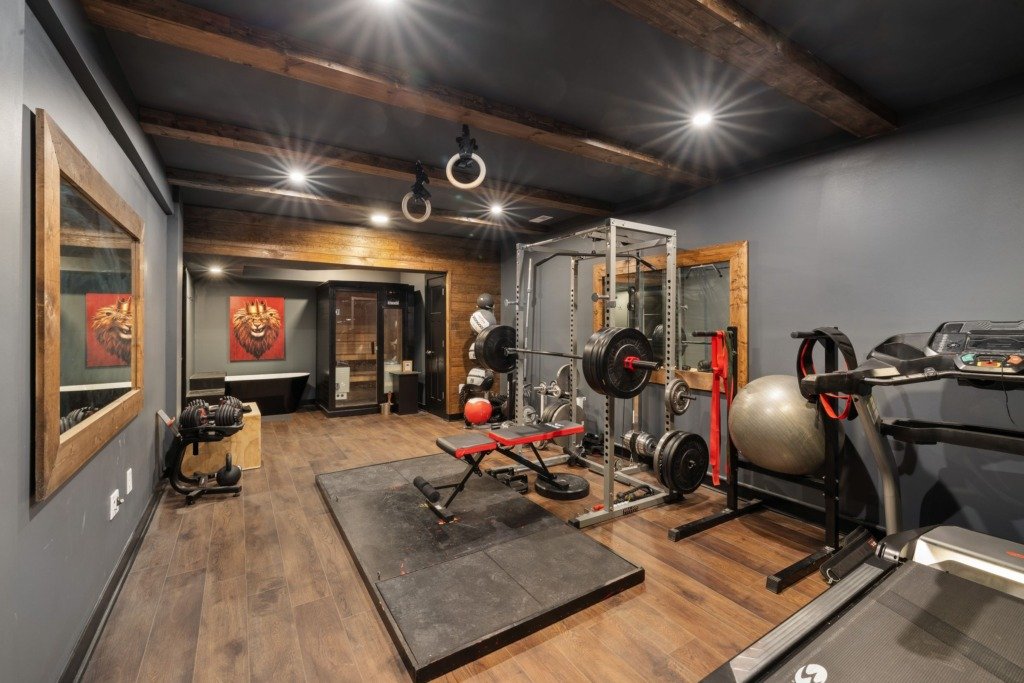
Flooring is the single most important decision in home gym design in a cairo apartment, because it does two jobs at once: protecting the slab underneath from dropped weights and absorbing enough impact sound that it doesn’t travel to the unit below. Interlocking rubber tiles, laid at a minimum of 20 millimetres thick, are the standard choice for a reason, they handle dropped weight, they’re easy to replace section by section if damaged, and they provide real acoustic dampening that a thin foam mat doesn’t.
Under the rubber tiles, a layer of dense acoustic underlay adds a second line of defence specifically against impact noise transmission through the concrete slab, which is the part of the sound a downstairs neighbour actually hears. This two-layer approach costs more than rubber tiles alone but is worth it in any compound building with tightly stacked units.

For a closer look at a related piece of the puzzle, see Walk-in Closet Design in Cairo.
Sound Insulation for Compound Living
Beyond the floor, isolating heavy equipment, a squat rack, a treadmill, on its own rubber pad rather than letting it sit directly on the flooring reduces vibration transfer at the source. Placing cardio equipment like a treadmill away from a shared wall, and toward an exterior wall instead, also limits how much of that low, repetitive impact reaches a neighbouring unit.
Timing matters as much as materials in a compound setting. Even a well-insulated gym will transmit some sound, so keeping heavy training sessions to reasonable hours is a simple, free way to avoid most complaints regardless of how well the room is built.
Ventilation and Cooling
A home gym needs more active cooling and air movement than a typical bedroom, since it’s generating heat and humidity from use rather than just from Cairo’s climate outside. A dedicated split AC unit sized generously for the room, plus a ceiling or standing fan for air movement during a session, keeps the room usable year-round rather than only in winter.
An exhaust fan or a window that can genuinely open helps clear humidity after a session, which matters for both comfort and for protecting any wood flooring or mirrors in the room from long-term moisture damage.
Mirror Placement and Storage
A full wall of mirror on the long wall of the room, rather than a single small mirror, makes the biggest visual difference in how the space feels and is genuinely useful for checking form during strength training. Position it away from direct AC airflow, since a cold draft across a mirrored wall causes condensation that shortens the mirror’s life.
Storage should be planned before equipment is bought, not after. A low, open shelving unit for dumbbells and kettlebells, a wall-mounted rack for resistance bands and mats, and a corner reserved for a foldable bench or bike keeps the room usable rather than becoming a place where equipment accumulates on the floor.
The equipment is the easy part. The floor, the ventilation, and the neighbour downstairs are what actually determine whether a home gym gets used for years or turns into storage within six months.
- Interlocking rubber tiles at least 20 millimetres thick over acoustic underlay
- A dedicated, generously sized split AC unit plus a fan for active air movement
- Full-wall mirror positioned away from direct AC airflow to avoid condensation
- Open shelving and wall-mounted racks planned before equipment is purchased
What Changes the Brief for a Home Gym
No two home gyms are the same, because the brief depends on how the household trains. Before we choose a room or a floor, we ask what will happen in it, how often, and who else in the building will notice.
The Type of Training
Heavy lifting needs a strong floor, generous ceiling clearance and careful noise control. Cardio machines need airflow and a position away from shared walls. Yoga and floor work need a calmer room with softer light. A room asked to do all of these needs a clear layout so each activity has its own zone.
Planning Order for a Home Gym
A gym is easier to plan in sequence than all at once, so the practical decisions are made before the costly ones.
- Choose the room and check the route equipment will take to reach it, including doors, lifts and stairs
- Decide the flooring system and sound treatment before any other finish is ordered
- Plan cooling, air movement and electrical points for machines and screens
- Choose the equipment last, so it is sized for the finished room rather than the other way round
Lighting, Sound and Atmosphere
Even, glare free lighting suits a gym better than a few strong spotlights, and fixtures should not reflect directly in the mirror wall or shine into the eyes of someone lying on a bench. Dimmable light lets the same room feel energetic in the morning and calm for stretching in the evening.
Choosing Equipment That Fits the Space
It is tempting to fill a spare room with as much equipment as possible, but a smaller selection of well chosen pieces gets used more. Folding benches, adjustable dumbbells and compact machines suit a Cairo apartment far better than a full commercial layout. Leave clear floor in the middle of the room, because that open area is what makes the space feel like a gym rather than a store room.
Check delivery before you buy. Large machines have to pass through the building entrance, the lift or stairwell and the room door. Made to measure storage and mirrors also have lead times, so order them early enough for the room to be ready when the equipment arrives.
Comparing Quotes for Gym Flooring and Fit Out
Quotes for gym work often look similar but cover different things. One may include only the rubber surface, another the acoustic underlay, edge trims and installation. Ask each supplier to list the layers, the finish at doors and skirting, who prepares the slab, and what happens if the floor needs to be lifted later.
Frequently Asked Questions
Can any spare room become a home gym?
Most can, provided the floor, ventilation and sound are addressed. A room with a window that opens, away from shared walls, is the easiest place to start.
Do I need a mirror wall?
It is not essential, but it helps with checking form during strength work and makes a smaller room feel larger.
How do I keep the gym from becoming a storage room?
Plan storage for every piece of equipment before it is bought, and keep the centre of the floor clear.
Can the gym room serve another purpose too?
Yes. With foldable equipment and good storage, a gym can double as a study or guest room, although heavy training and quiet use rarely suit the same hours.
Design a home gym around sound and heat first, equipment second: rubber flooring over acoustic underlay, isolated placement for heavy machines, real ventilation, and storage planned in advance. Get those right and the room holds up to daily use in a way a converted spare room rarely does on its own.
Fitting a functional gym into an existing floor plan is exactly the kind of space-planning problem Residential Interiors solves early in a project, and Private Gym converted an underused study into a fully insulated home gym using this same layering approach. The storage principles here carry over to the rest of the apartment too, covered in Choosing Storage and Wardrobe Solutions for a New Cairo Apartment.

Free guide
Choosing Materials That Last in a Cairo Home
Leave your details and we will email you the guide on this subject straight away.
One guide, no repeat mailings.
Your guide is on its way
Check your inbox in a few minutes. If it is not there, look in your spam folder.