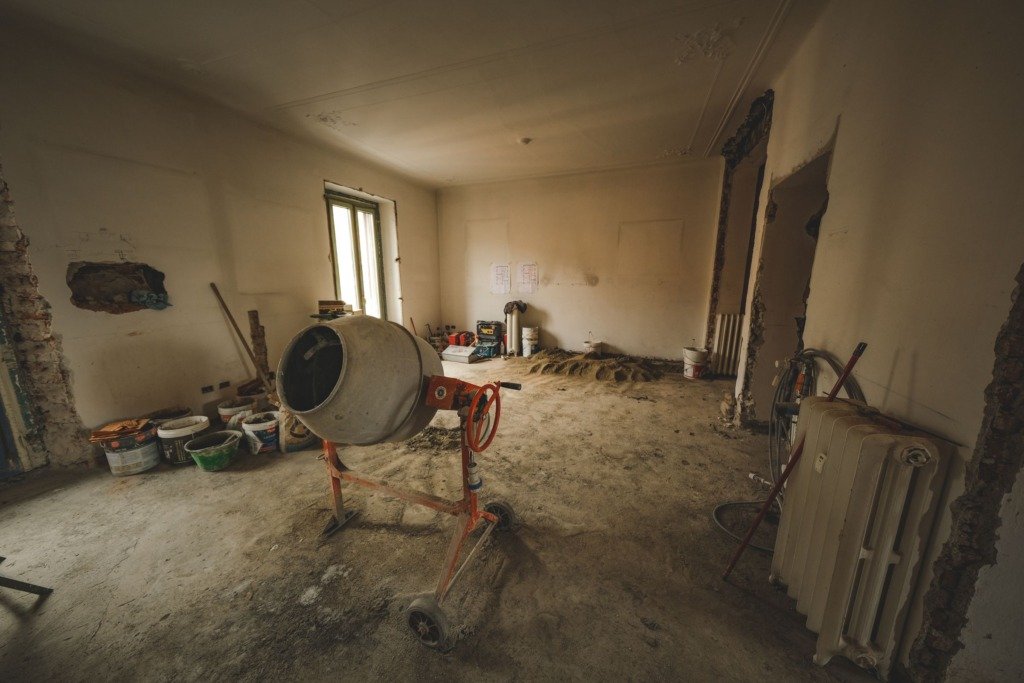
Renovating an old apartment in Cairo is a different job than renovating a five-year-old unit in New Cairo, even when the square meterage and the brief look identical on paper. An older building in Heliopolis, downtown, or the original blocks of Nasr City carries decades of decisions nobody documented, and a good part of the renovation is uncovering what those decisions were before any new work can safely begin.
We treat this as part of the core Residential Interiors process on every project, not an optional extra.
Wiring and Plumbing You Cannot See From a Floor Plan
New-build apartments come with wiring and plumbing sized and routed to current standards, which a floor plan can mostly account for in advance. Older buildings often do not. Aluminum wiring instead of copper, plumbing routed through a wall that later got tiled over, a circuit shared across two apartments in ways that only become visible once a wall is opened. None of this shows up in a walkthrough; it shows up once demolition starts, which is why the early stage of the schedule needs room for it.
Dimensions That Do Not Match the Plan
Older Cairo apartments were often built before standardized fittings became common, so a door opening, a niche, or a window frame can be a few centimeters off from what a catalog item expects. It sounds minor until a custom kitchen unit or a wardrobe has to be resized on site because the wall it was measured against was never quite square to begin with.
- A door frame that is 4cm narrower than the modern standard
- A window recess too shallow for a standard-depth radiator or unit
- A ceiling height that varies room to room in the same apartment
Structural Surprises Behind the Walls
Removing a wall in an older building carries more uncertainty than the same move in new construction, because there is rarely original structural documentation to check against. A wall assumed to be partition can turn out to be load-bearing, or a beam can sit lower than expected once the ceiling finish comes down. This is exactly why a structural assessment happens before demolition, not after, on any older unit.
An old building does not tell you what it is hiding. It only tells you once the wall is open.
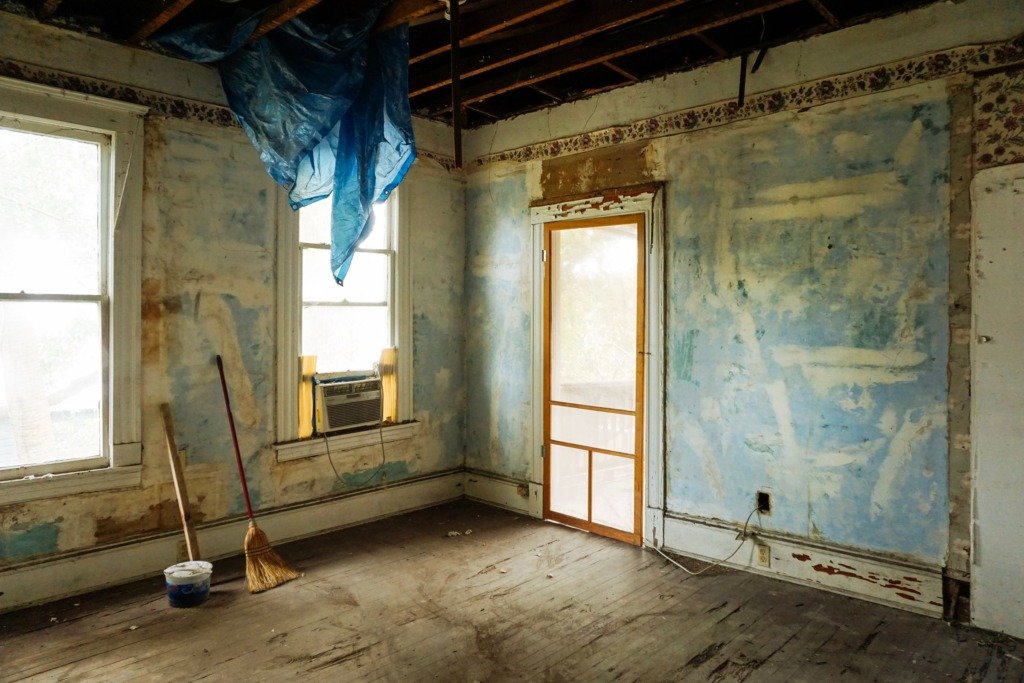
We go into a related topic in more depth in Understanding Compound Renovation Rules in New Cairo, worth a read alongside this one.
Working in an Occupied Older Building
Renovation in an occupied older building, one where other apartments are lived in year-round, comes with its own set of constraints that a new compound simply does not have: shared stairwells that cannot be blocked, older elevators with real weight limits, and neighbors who have lived through renovations before and have opinions about noise. Coordinating around this is as much a scheduling skill as a design one.
Renovating an Old Apartment in Cairo: Budgeting for the Unknown
A new-build renovation can be budgeted fairly tightly, since most of what the site will reveal is already known from the developer’s drawings. Renovating an old apartment in Cairo needs a genuine contingency built into the budget from the start, typically ten to fifteen percent held back specifically for what the walls, floors, and ceilings turn out to be hiding once work begins. Treating that contingency as optional, or assuming it simply won’t be needed, is one of the most common ways an older-building renovation runs over budget partway through.
Permits and Approvals for Older Buildings
Older buildings, particularly those in Heliopolis and downtown, sometimes carry different permit requirements than a New Cairo compound unit, especially where a building has heritage status or sits in a district with its own approval process. Checking this early, before demolition starts rather than after a neighbour or the building’s management raises it, avoids a stop-work order partway through a project that a five-minute enquiry at the district office would have prevented.
Materials That Suit an Older Building
Matching a new floor or a repaired section of plaster to what already exists in a decades-old apartment rarely means an exact match, since manufacturers change ranges and batches over the years. Choosing a natural break, a threshold, a change of room, where the new material meets the old, generally reads as more intentional than chasing a seamless match that the market may no longer supply.
A Sensible Order for an Older Apartment
Survey and open up first
Measure every room and open a few test points in walls and ceilings before the design is fixed. What you find decides how much of the old fabric can stay, and it is far cheaper to learn it on paper than in the middle of work.
Fix services before finishes
Wiring, plumbing and drainage come before anything decorative. Replacing them once the walls are closed and tiled is disruptive and wasteful, so decide early what is being renewed and what is being kept.
Finishes and joinery last
Made to measure joinery should be built from dimensions taken after walls are straightened and floors levelled, not from the first rough survey. That one rule avoids most of the resizing that older apartments are known for.
What to Find Out Before Committing
The history of the building
Ask who owned and altered the apartment before you, and whether any earlier work was approved. Previous owners often moved walls or closed balconies, and undocumented changes are the ones that surprise a project.
Neighbours and management
In an older building the neighbours and the doorman often know the history better than any document. A short, polite conversation before work starts gives you information and goodwill at the same time.
Shared risers and services
Water and drainage lines often pass through several apartments. Before touching them, find out what is shared so that work in your unit does not interrupt your neighbours.
Materials and Climate in an Older Building
Walls and damp
Never paint over a damp patch. Find the cause first, whether it is a leak, a roof problem or moisture rising from below, repair it, let the wall dry and only then plaster and paint.
Floors that are not level
Old floors often slope or vary from room to room. Levelling before the new finish goes down saves tiles and boards from cracking, and it should be allowed for in the sequence rather than discovered at the tiling stage.
Ventilation and daylight
Older apartments often have tall ceilings and good cross ventilation that are worth keeping. A new ceiling or partition should not block the airflow that the building was designed around.
Quotes, Lead Times and Working Remotely
Comparing quotes for older buildings
A quote that assumes everything behind the walls is sound is a quote waiting to change. Ask how each contractor handles discoveries, who approves the extra work and how it is recorded, and compare on that basis as well as on the headline.
Lead times for made to measure items
Because final dimensions are only known once walls and floors are corrected, joinery and glass orders come later than in a new unit. Plan the order of work so that workshops are not waiting on the site, or the site on the workshops.
Following the work from abroad
Photographs and short site reports at each stage let an owner who is away approve decisions with confidence, particularly before anything is covered up.
What to prepare
- Any old plans, photographs or building documents
- A list of problems you already know about, such as leaks or cracks
- The names of previous contractors, if known
- Your priorities, so the room for surprises is spent on what matters
Frequently Asked Questions
Should I survey before I buy an older apartment?
If you can, yes. A visit with a designer or engineer before purchase shows the likely scope of work and helps you judge whether the price leaves room for it.
Can the old doors and windows stay?
Often yes, if the frames are sound. They can usually be repaired and refinished, which keeps the character of the building.
Is a structural check always needed?
It is needed whenever a wall, opening or floor level is being changed. For purely surface work it may not be, but ask an engineer when in doubt.
How do I keep the building character while updating it?
Keep the features that give the apartment its identity, such as ceiling height, original doors or floor patterns, and update the services and finishes around them.
An older building is not a harder version of a new one. It is a different job with its own sequence.
Working through these unknowns without derailing the schedule is a core part of how Residential Interiors runs on Lotus Villa Renovation and similar older properties. Before any of this starts, What Happens During a Site Survey Before Design Work Starts covers what a proper site survey is meant to catch first.

Free guide
The Renovation Process in New Cairo, Step by Step
Leave your details and we will email you the guide on this subject straight away.
One guide, no repeat mailings.
Your guide is on its way
Check your inbox in a few minutes. If it is not there, look in your spam folder.