Choosing a bathroom vanity in Cairo starts with water, not style, even though style is what pulls most people in first. Egypt’s tap water carries a noticeably high mineral content, and a bathroom is the one room in the house where that water sits on a surface every single day. A vanity that looks perfect in a showroom photo can develop cloudy limescale rings and a dull finish within a year if the material wasn’t chosen with that in mind.
We treat this as part of the core Residential Interiors process on every project, not an optional extra.
Humidity is the second factor, and it is a constant rather than a seasonal concern in most Cairo bathrooms, particularly ones without strong extraction. Any vanity built from raw or poorly sealed wood will eventually swell, warp at the joints, or delaminate at the base where water pools after a shower. This isn’t a reason to avoid wood entirely, but it does mean the carcass material and the sealing matter more here than in almost any other room.
Choosing a Bathroom Vanity in Cairo: Materials That Hold Up
- Marine-grade plywood or moisture-resistant MDF for the cabinet carcass, sealed on every edge, not just the visible faces
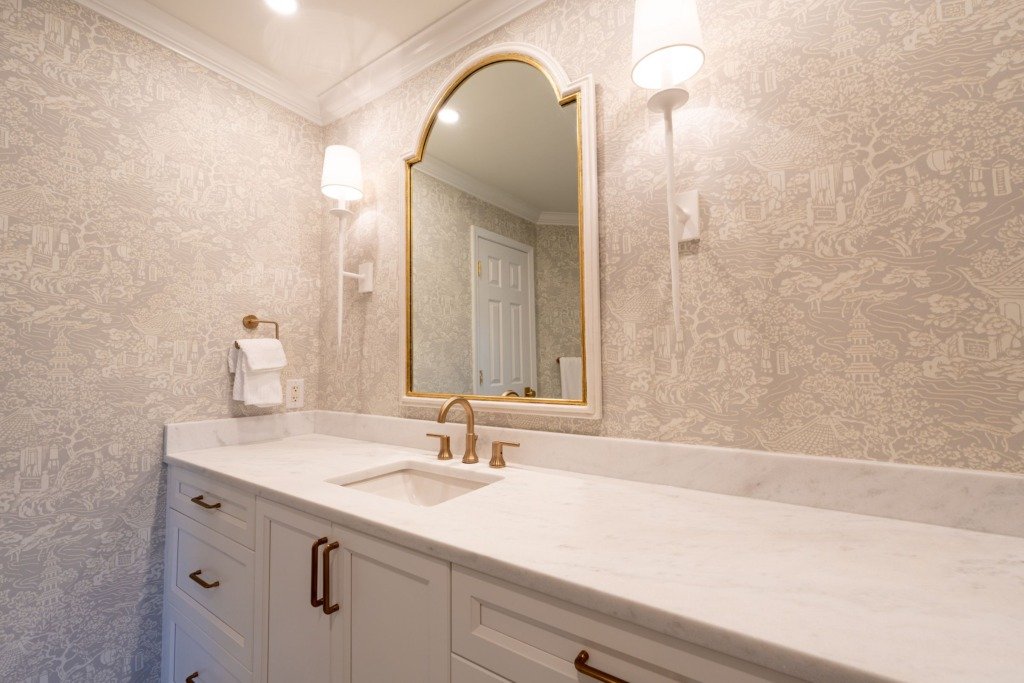
- Quartz or porcelain countertops over natural marble, which resists hard water staining far better
- Matte or brushed metal fittings over polished chrome, since polished finishes show water spots almost immediately
- PVC or acrylic cabinetry as a genuinely low-maintenance option in a guest bathroom or powder room
Solid wood vanities are not off the table entirely, but they need to be treated as a considered choice rather than a default. A solid wood carcass with a proper marine varnish and a raised base that keeps it off any water pooling on the floor can perform well for years, though it will always ask more of the household in terms of upkeep than an MDF or PVC alternative, and that trade-off is worth being honest about before committing to it for its warmer, more natural look.
Countertop Sinks Versus Vessel Sinks
This is largely an aesthetic decision, but it has practical consequences worth knowing before you commit. A countertop sink, set into or below the counter, is easier to clean since there is no rim collecting hard water residue and grime, and it suits a busier family bathroom well. A vessel sink sitting above the counter reads as more sculptural and works beautifully as a feature, but the exposed base and any gap between bowl and counter needs regular attention to avoid a ring of buildup.
In a Cairo home, our general advice is to reserve vessel sinks for a powder room or a secondary bathroom that gets lighter daily use, and keep the main family bathroom practical with a countertop-set basin that a household actually wants to clean regularly.
We go into a related topic in more depth in Choosing Outdoor Furniture for a Cairo Terrace, worth a read alongside this one.
Storage That Matches How the Household Actually Uses It
A vanity is also the single largest storage opportunity in most bathrooms, and it is worth sizing to the household rather than to a standard catalogue width. A family bathroom benefits from full-depth drawers over a single cabinet door, since drawers keep toiletries visible and accessible rather than stacked behind each other in the dark.
- Deep drawers for towels and larger items, sized to the vanity’s full depth rather than a shallow half-drawer
- A shallow top drawer for daily items like toothbrushes and skincare, kept close to hand
- Open shelving below only in a guest or powder room, where it reads as intentional rather than cluttered
- A tall side cabinet where floor space allows, for items that don’t need daily access
Taps, Hardware, and Hard Water
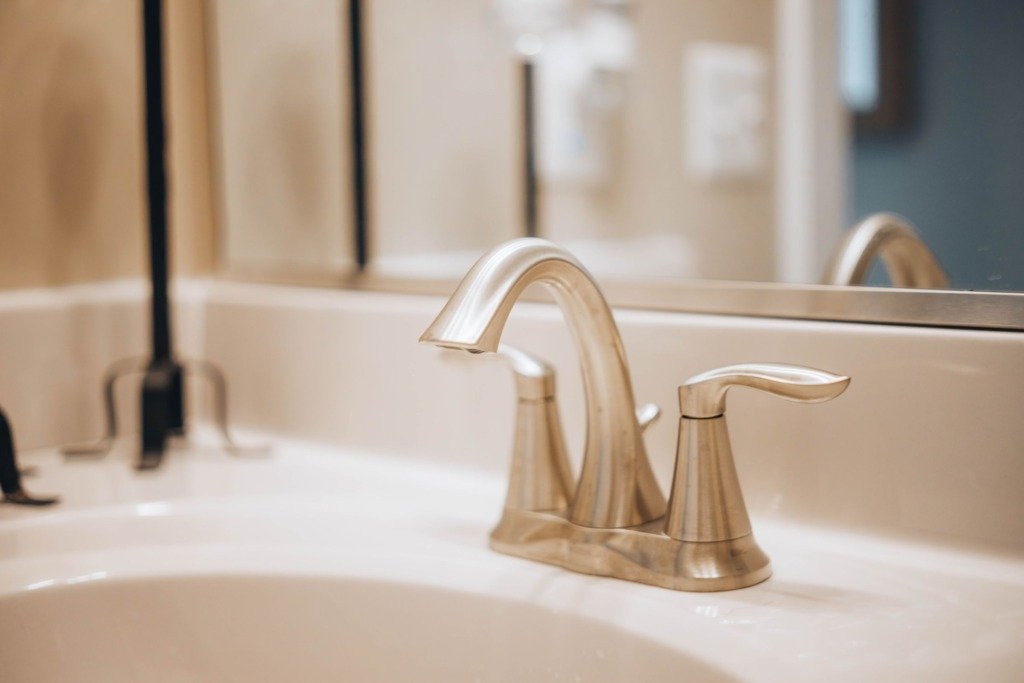
Hard water leaves its mark fastest on fittings, not the vanity carcass itself, so it’s worth putting real thought into tap and hardware finish. Brushed nickel and matte black both hide limescale spotting far better than chrome or polished gold over time, simply because the marks blend into a finish that already has some texture rather than standing out against a mirror-smooth surface. A single-lever mixer tap with a smooth, gap-free base also collects less residue at the point where it meets the countertop than a traditional two-handle set, which has more crevices for buildup to settle into over months of daily use.
A vanity has to survive daily water contact for a decade or more. Choosing it on looks alone in a showroom is how most bathroom regrets start.
Sizing and Positioning the Vanity
Start with Clearances
Before choosing a width, check the door swing, the shower screen and the space needed to stand and bend comfortably at the basin. A vanity that looks generous on a drawing can crowd a small bathroom, so we mark it out on the floor with tape before anything is ordered.
Height and Comfort
Standard heights suit most adults, but a household with young children or taller members may want a slightly different counter level. Think about who uses the basin most and set the height around them.
Wall Hung or Floor Standing
A wall hung unit leaves the floor visible, which makes a small bathroom feel larger and makes cleaning easier. It does need a solid wall behind it, so check the wall construction early. A floor standing unit is simpler to fit and carries more weight, which suits a heavy stone top.
Plumbing and Services Behind the Vanity
Where the Pipes Run
Water supply and waste points decide what the cabinet can look like inside. If the pipes come from the wall, drawers need a cut out around the trap. If they come from the floor, a different internal layout may be needed. Confirm the positions on site before the joinery is drawn.
Sockets, Lighting and Safety
Plan sockets for hair dryers and shavers away from water, and position mirror lighting so faces are lit evenly from the sides rather than from a single overhead point. Electrical work in a wet room must follow the proper safety zones, so involve the electrician at the planning stage.
- Isolation switches and sockets placed outside the splash zone
- Mirror lights rated for damp rooms
- A clear route for extraction so steam does not settle on the cabinet
Comparing Quotes and Lead Times
What a Fair Comparison Includes
Two quotes for a vanity are only comparable if they name the same carcass material, edge sealing, countertop, basin, taps and installation. A lower figure often leaves out one of these, so ask each supplier to list them line by line.
Order Early for Custom Work
Custom joinery and cut stone tops take time to produce, and imported fittings can take longer to arrive. Confirm the fittings first, since the cabinet is cut around them, and keep the bathroom schedule flexible so a late delivery does not hold up tiling.
Planning a Vanity When You Live Abroad
Decisions You Can Make Remotely
Layout, materials and finishes can be agreed from photographs, samples and drawings. Ask for samples to be couriered or viewed with a trusted family member, because screens rarely show the true colour of a stone or lacquer.
Decisions Worth Seeing in Person
Final heights and the position of the basin are best checked on site once the walls are ready. A short visit, or a live video walk through with the contractor, saves costly corrections later.
Frequently Asked Questions
Is quartz better than marble for a vanity top?
For most family bathrooms, yes. Quartz resists staining and hard water marks far better, while marble needs regular sealing and shows etching more easily.
Can a wooden vanity work in a humid bathroom?
It can, if the wood is sealed on every edge, the base is lifted off the floor and the room has good extraction. Expect to maintain the finish more often than with MDF or PVC.
Should I choose a single or double basin?
Only if the bathroom is wide enough and two people genuinely use it at the same time. Otherwise one basin with more counter space is usually more useful.
How do I keep limescale off the taps?
Wipe the fittings dry after use, choose a brushed or matte finish and descale gently on a regular basis. A water filter at the supply can also reduce buildup.
Prioritise sealed, moisture-resistant materials over anything porous, and pick the sink style based on how hard that particular bathroom actually gets used, not how it photographs.
Getting the vanity right is one part of a wider set of bathroom material decisions that Residential Interiors works through on every project, and Villa Basement Spa & Pool used quartz-topped vanities with full-depth drawer storage across both its bathrooms for exactly this reason. For the fuller picture on bathroom surfaces beyond the vanity itself, Choosing Bathroom Materials That Still Look Good in Five Years covers flooring and wall finishes in the same climate context.

Free guide
Choosing Materials That Last in a Cairo Home
Leave your details and we will email you the guide on this subject straight away.
One guide, no repeat mailings.
Your guide is on its way
Check your inbox in a few minutes. If it is not there, look in your spam folder.