Egyptian cooking is not gentle on a home. Frying, grilling and long slow cooking put a great deal of grease and moisture into the air, and in an apartment that air has nowhere to go except into the rest of the home. Curtains hold it, upholstery holds it, and the wardrobe in the bedroom nearest the kitchen holds it longest of all.
This is almost never solved by buying a more powerful extractor. It is solved by where the extractor is, what it is connected to, and whether the air being removed is being replaced from somewhere sensible.
Recirculating Hoods Do Not Remove Smells
The most common installation in Cairo apartments is a hood that filters the air through charcoal and returns it to the room. It removes some grease and almost no smell or moisture, and the filter is usually never changed. If cooking smells travel through your home, this is the first thing to check, because no amount of power improves a hood that is not connected to the outside.
A ducted hood, discharging outside through the shortest and straightest route available, is a different category of appliance in practice, whatever the specification sheets say.
What Makes a Ducted Hood Actually Work
- Duct diameter kept at the size the manufacturer specifies, never reduced to fit a ceiling void
- The shortest route with the fewest bends, since every bend costs a significant share of the airflow
- Rigid ducting rather than flexible, which is dramatically more efficient
- The hood sized wider than the hob, and deep enough to cover the front burners
- Mounted at the height the manufacturer states, since too high is the commonest installation error
A powerful extractor connected through a long flexible duct with four bends moves less air than a modest one ducted properly.
Air Has to Come From Somewhere
A strong extractor in a sealed apartment cannot work, because air removed has to be replaced. In a tightly closed home the extractor either struggles or pulls air in from the stairwell, the bathroom shaft or a neighbour, which is how one apartment ends up smelling of another. Opening a window in an adjoining room while cooking is the simple version. A dedicated make up air path is the designed version, and it matters most in newer, tighter buildings.
Open Plan Kitchens, Which Raise the Stakes
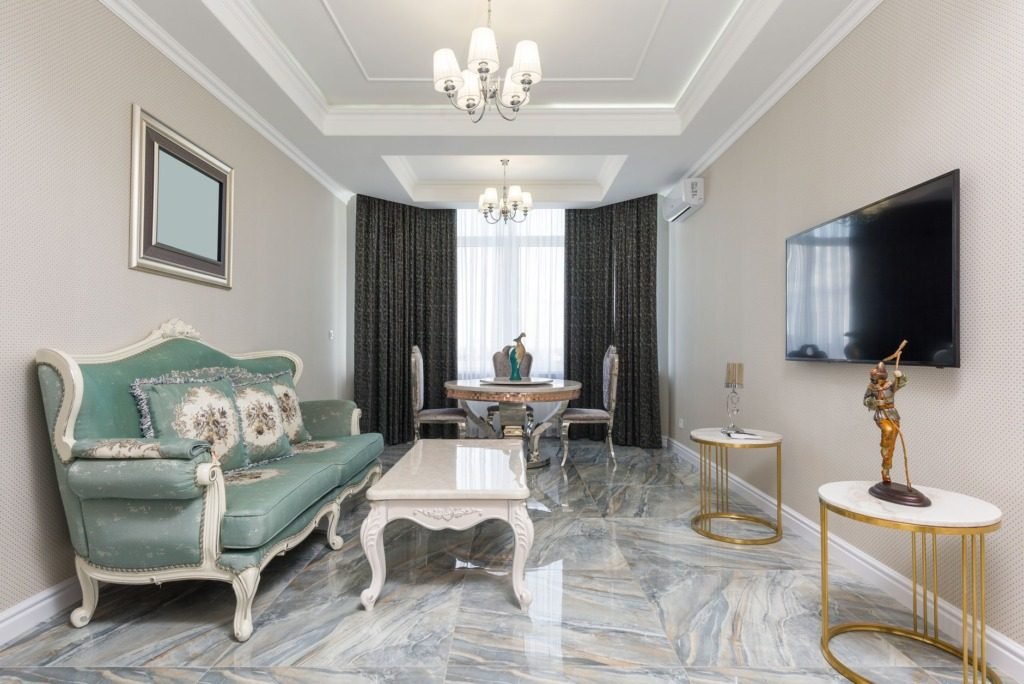
An open plan kitchen connected to the living area is now standard in New Cairo apartments, and it removes every barrier between cooking and the rest of the home. It can work very well, but it requires a genuinely good ducted extractor, sized generously, plus the ability to close the kitchen off when something is being fried. A sliding or pocket door that is open ninety per cent of the time and closed for the other ten per cent resolves this better than any appliance.
Surfaces That Hold Smells, and Those That Do Not
- Open shelving near a hob collects grease on everything stored there
- Textured and matt painted walls hold more than a wipeable finish near the cooking zone
- Fabric blinds in a kitchen absorb smells permanently, where a wipeable blind does not
- Extract as close to the source as possible, since anything that escapes the hood is already in the home
Kitchen Ventilation in Cairo Apartments, Planned Properly
The order is always the same: duct to the outside, keep the run short and rigid, size the hood to the hob rather than to the gap in the units, and make sure replacement air can get in. Decided at the design stage it costs no more than the version that does not work.
What Shapes the Brief for Kitchen Extraction
How You Actually Cook
Frying, grilling and long slow cooking each put a different load on the air. A household that cooks every day in the traditional way needs far more from an extractor than one that mostly reheats food, and the brief should say honestly which of the two you are.
Where the Kitchen Sits in the Plan
A kitchen on an outside wall is the easiest to duct, because the route to the open air is short. A kitchen in the middle of an apartment may depend on a shaft or a long run above the ceiling, and that route decides what is possible before any appliance is chosen.
What the Building Allows
Ask the building management early whether there are any rules about openings in the facade or about using shafts. The permitted route can change where the kitchen is best placed, and it is far easier to learn that at the start than after the cabinets are ordered.
The Order of Decisions for Good Extraction
Extraction works when the decisions are made in the right order. Made the other way round, the best hood in the showroom ends up connected to a poor route.
Fix the Hob Position First
Everything else follows from where the cooking happens. Once the hob is fixed, the hood, the duct and the cabinet layout can all be drawn around it.
Draw the Duct Route Before the Cabinets
The duct needs a clear path, and tall cabinets, beams and services all compete for the same space. Drawing the route first means the cabinets are made to suit it, rather than the duct being bent to avoid them.
Select the Hood to Suit the Hob and the Route
Only now is the hood chosen, because its outlet position and size have to match the duct that has already been planned. This is the reverse of how most kitchens are bought, and it is the reason most of them disappoint.
Plan the Replacement Air
Decide where fresh air will come from before the extractor is switched on for the first time. A window in the next room is the simple answer, and a planned opening is the better one in a tightly sealed apartment.
Cooking Habits That Help
A good extractor still depends on how it is used. A few habits make the same equipment work noticeably better.
- Switch the extractor on before cooking begins so the air is already moving
- Leave it running for a while after the pan comes off the heat
- Close the kitchen door while frying so the smell stays where it can be removed
- Open a window in an adjoining room to let replacement air in
- Wash the grease filters regularly, following the maker instructions
Do Not Let Grease Settle
Grease that is wiped away the same day is a minor job. Grease that is left builds into a sticky layer that holds smells long after the cooking has stopped, so a quick wipe of the hood, the splashback and the nearest handles is worth the effort.
Finishes That Cope With a Cooking Kitchen
Walls and Splashbacks
Behind the hob, choose a surface that wipes clean in one pass. Glass, porcelain and sealed tile all do this well, while rough or porous surfaces take in grease and give it back as smell.
Neighbours and Shared Shafts
Stopping Smells Coming Back In
A duct that discharges into a shared shaft can let smells travel between apartments when the extractor is off. A shutter fitted in the duct that closes when the extractor stops is a small item that prevents a large irritation.
Where the Air Is Discharged
Warm greasy air should leave the building away from windows and balconies, yours and your neighbours. It is a courtesy, and in a close community it avoids disputes later.
Comparing Quotes and Planning Lead Times
Two kitchen quotes can look alike while one of them leaves out the entire extraction system. The duct, the wall or roof outlet, the shutter and the replacement air opening are items that vanish from the cheaper version.
Order the Hood Early
The cabinet cut-outs and the duct opening depend on the exact dimensions of the hood, so it should be chosen and ordered before the cabinets are made. Waiting for the hood to arrive often holds up the whole kitchen.
Frequently Asked Questions
Why does my kitchen still smell with a powerful hood?
Usually because the hood recirculates air, the duct is long and bent, or there is no replacement air. Power cannot make up for a poor route.
Is a recirculating hood ever enough?
For light cooking where no route outside is possible, it is better than nothing. Expect it to reduce some grease rather than remove smell or moisture.
Can I improve an existing kitchen without rebuilding it?
Often yes. Check the route, replace a flexible duct with a rigid one, clean the filters and make sure fresh air can enter. These steps cost far less than a new kitchen and can make a clear difference.
How do I keep cooking smells out of the bedrooms?
Extract as close to the cooking as possible, keep the kitchen door closed while frying, and make sure replacement air does not pull smells in from elsewhere in the home.
Make sure the hood is ducted outside, not recirculating, and that the duct is rigid and short. That single decision removes most cooking smells from an apartment.
Extraction routes are worked out at the layout stage by Residential Interiors, because they depend on where the kitchen sits in the plan, as they did in Taj City Villa Project. Kitchen Cabinet Materials That Hold Up in a Cairo Kitchen covers the cabinetry side of the same planning decision.

Free guide
Choosing Materials That Last in a Cairo Home
Leave your details and we will email you the guide on this subject straight away.
One guide, no repeat mailings.
Your guide is on its way
Check your inbox in a few minutes. If it is not there, look in your spam folder.