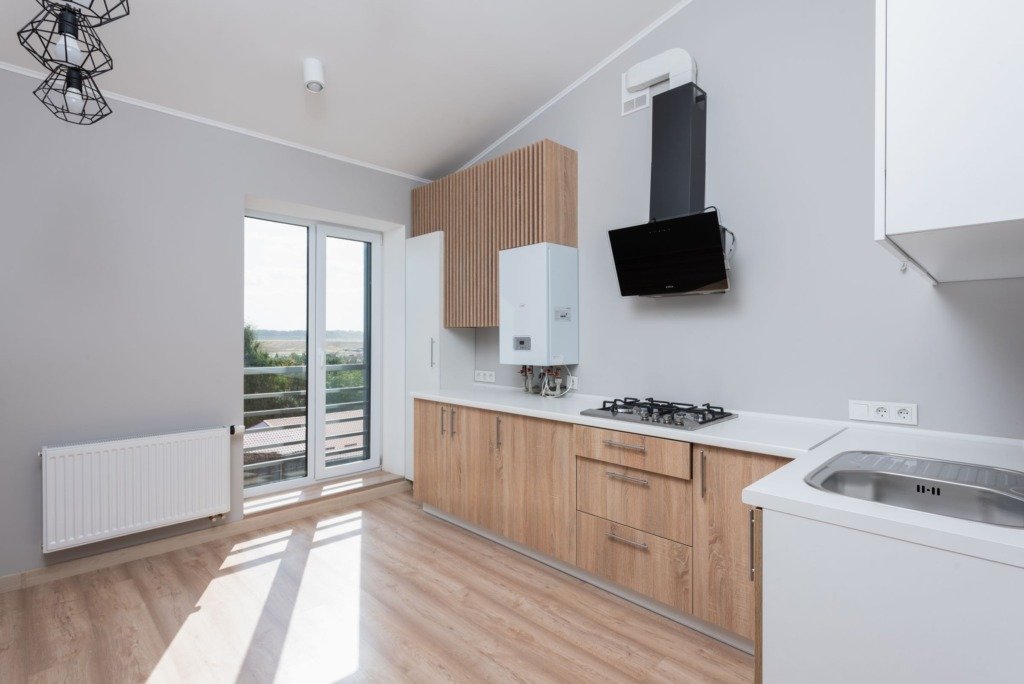
A semi finished or fully finished handover is meant to be a convenience, and often it is the opposite. The tiles are a colour nobody chose, the kitchen is a builder standard unit, the doors are hollow, and everything is brand new, which makes removing it feel wasteful even when it is the right decision.
The feeling of waste is what causes the expensive outcome. Owners keep things they dislike because they are new, live with them for two years, and remove them anyway once the rest of the home has been finished around them, which costs far more than removing them at the start.
Decide Once, Before Anything Else Is Done
The only cheap moment to remove a developer finish is before you have built anything around it. Replacing floor tiles before skirting, joinery and kitchen units are installed is straightforward. Replacing them afterwards means removing all of it first. If you know you will not live with something, remove it in the first phase, not the third.
Usually Worth Replacing
- Floor tiles, if you dislike them, because everything else in the home is installed on top of and against them
- The kitchen, since developer kitchens are usually the cheapest specification in the apartment and are rarely laid out for how anybody cooks
- Internal doors and ironmongery, which are one of the most visible markers of a builder standard finish
- Sanitary ware and taps, which are quick to change before tiling is disturbed and expensive afterwards
- Lighting, which is nearly always a single central point per room and defines how the home feels
Usually Worth Keeping
Not everything deserves removal, and knowing what to leave alone is where the budget is protected.
- Wall plaster and preparation, which is usually sound and can simply be repainted
- Window frames and glazing, unless there is a genuine performance problem
- Waterproofing and screeds that are behind or beneath finishes and are performing, since disturbing them creates risk
- Electrical wiring, provided the circuits are adequate, with points added rather than everything rewired
Anything you already know you will not live with should come out in the first week, not the third year. Newness is not a reason to keep something you dislike.

Removing Without Creating New Problems
Taking out a developer finish is not always simple. Tiles bedded onto a screed can take the screed with them and leave levels that no longer meet the lift lobby. Removing a kitchen can expose plumbing that was never intended to be seen or moved. A short survey before demolition, establishing what is behind and beneath, is worth the small cost it carries.
The Warranty Question
Many developers in New Cairo and Madinaty attach a snagging or warranty period to the handover finishes, and removing them can end it. Before stripping anything, it is worth reading what the warranty actually covers and for how long. In most cases it covers only the items being removed anyway, but the water ingress and structural elements are the ones to check carefully.
Replacing Developer Finishes Without Wasting Money
The efficient version is a single decision made early: walk the apartment once, with someone technical, and sort every element into keep, replace now or replace later. That list becomes the scope, and it prevents both the expensive mistake of living with things you dislike and the equally expensive one of stripping an apartment that was largely fine.
How the Handover Level Changes Your Brief
A semi finished apartment and a fully finished one ask for different decisions. In a semi finished unit there is often less to remove and more to specify from scratch, so the question is mostly about what you add. In a fully finished unit the developer has already made every choice for you, and the brief becomes a careful sorting of what stays and what goes.
Know exactly what you were handed
Ask for the written description of the handover and compare it with what is actually on site. Brochures and sales conversations describe an intention, while the apartment shows the reality. Any gap between the two is worth noting before work begins, because it changes both what you can reasonably keep and what you can raise with the developer.
Decide what this home is for
A home you intend to keep deserves better doors, floors and fittings than one you expect to sell on. Be honest about which one this is. Spending heavily on replacements in a flat you plan to sell rarely returns what it cost, while keeping poor finishes in a family home means paying for the change twice.
Planning the Order of Work
Services and structure before surfaces
Anything that sits inside walls, floors and ceilings should be settled before any new surface goes on. If you are moving a kitchen or a bathroom, the pipework and drainage decide the new layout, so they are agreed on the drawings first. The new finishes then follow in a sequence that never asks one trade to damage the work of another.
Protect what you are keeping
Elements you have decided to keep still need guarding while everything around them is being demolished. Window frames, retained floors and good wall plaster are easily damaged by barrows, dust and falling debris. Agree who covers them, with what, and who is responsible if they are marked.
Materials and Climate for the Replacements
Floors and wet areas
When a floor tile comes out, the replacement should suit how the room is used and the heat of the climate rather than the picture in a showroom. Hard, dense surfaces cope well with Cairo summers and dust, and a matt or lightly textured finish is safer underfoot in kitchens and bathrooms. Always look at a real sample in the light of your own apartment.
Doors and joinery in a dry dusty climate
Hollow builder doors are light and thin, and they carry sound, so an upgrade is often felt as much as seen. Solid or well made doors with proper ironmongery close more quietly and last longer. Joinery should be made for dry air and seasonal swings so that it does not warp or open at the joints.
Comparing Quotes for Replacement Work
Price removal separately from the new work
A quote that mixes demolition, disposal and new installation in one line cannot be compared with another. Ask each contractor to list removal, making good and the new finish as separate items. You will then see who has allowed for the awkward parts, and who has simply priced the easy ones.
Ask who takes the old materials away
Removed tiles, doors and kitchen units leave a lot of waste, and it must be carried out of the building, often through a lift and a shared stair with their own rules. Confirm who handles this and who deals with the compound management, so it is not discovered halfway through the work.
What to Prepare Before the Walkthrough
A short walkthrough is far more useful when you arrive prepared. Bring the following.
- The written handover description and any drawings the developer supplied
- A list of what you dislike, ordered by how much it bothers you every day
- Photographs of anything you already find damaged or poorly finished
- Any rules the compound or the building has about works, deliveries and permitted working times
- A rough sense of which rooms you will use first
Frequently Asked Questions
Can I sell or reuse the finishes I remove?
Sometimes. Kitchen units, doors and sanitary ware in good condition can often be offered to someone else or reused in a utility area. Decide before demolition, because items removed carelessly cannot be reused.
Should I tell the developer before I start?
Read the handover paperwork first and follow any notice it asks for. It is also sensible to tell the compound management about the works so that deliveries and working times are agreed in advance.
Is it cheaper to replace everything at once?
Usually it is easier to coordinate, because trades work in a clean sequence and nothing is damaged twice. It is not always cheaper if you replace things that were performing well, which is why the keep or replace list matters.
What if the finish is sound but I dislike the colour?
Often paint, a new surface treatment or changed lighting and furniture will change the feel without any removal. Replace only what cannot be solved by something simpler.
Can I do this while living in the apartment?
It is possible for small scopes, but heavy removal creates dust and noise that make daily life hard. Where you can, finish the demolition and the dirty work before you move in.
Make the keep or replace decision for the whole apartment in the first week. Removing a finish before anything is built against it costs a fraction of removing it later.
A handover walkthrough of exactly this kind is a short piece of work and one of the most useful things Residential Interiors does. Apartment Finishing Types in Egypt: What They Actually Mean explains what each handover level should include in the first place.

Free guide
The Renovation Process in New Cairo, Step by Step
Leave your details and we will email you the guide on this subject straight away.
One guide, no repeat mailings.
Your guide is on its way
Check your inbox in a few minutes. If it is not there, look in your spam folder.