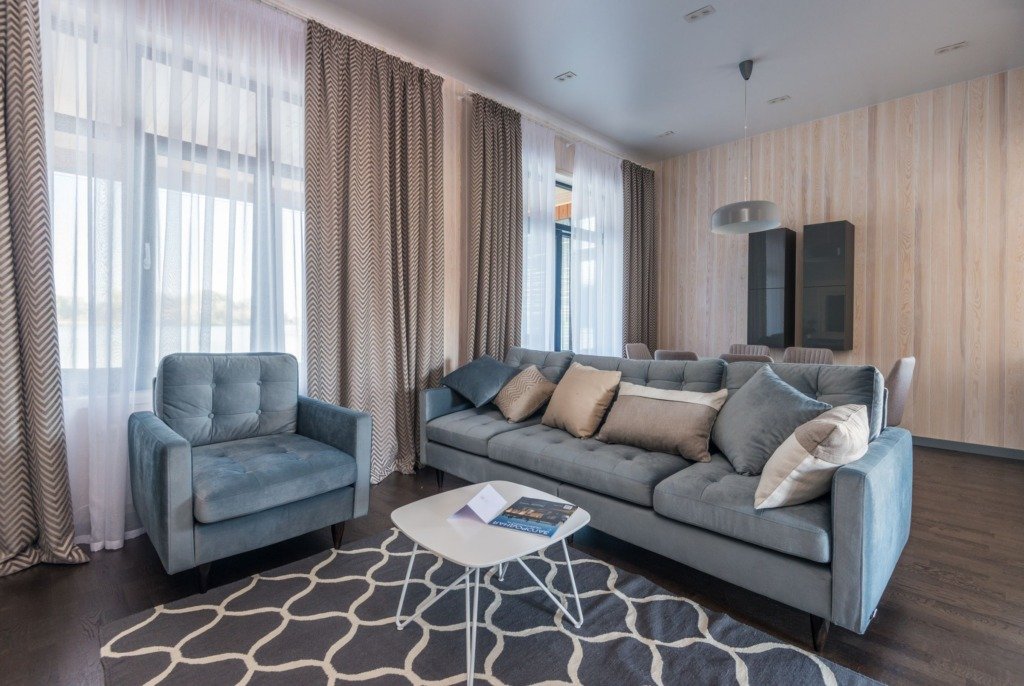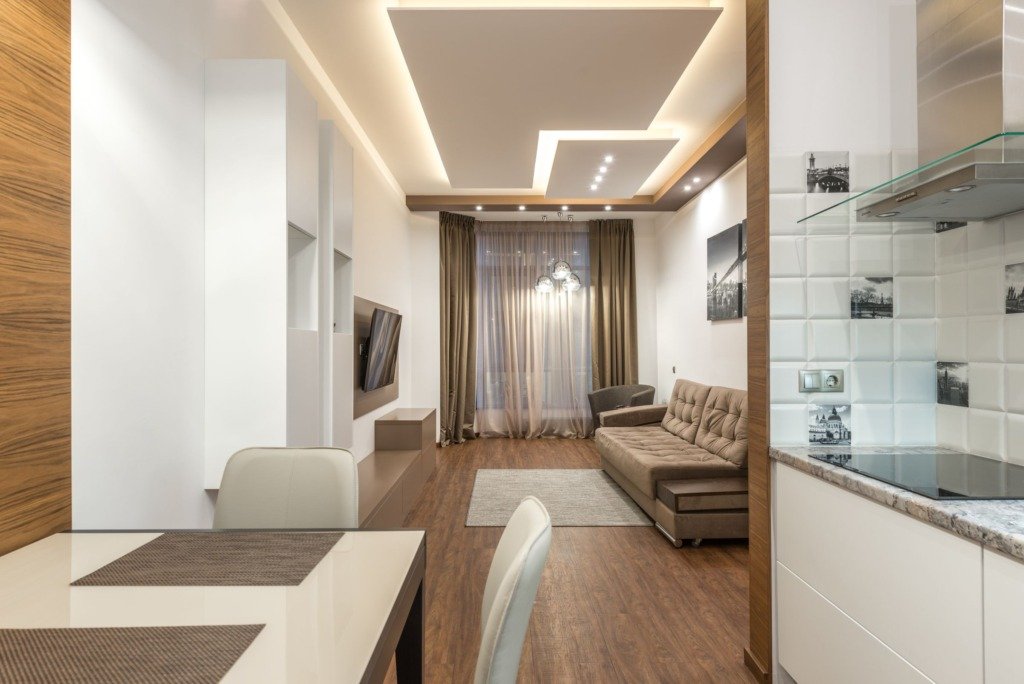
False ceiling design in Cairo apartments gets treated as a default finish rather than a decision, and that is usually the wrong way to approach it. Most Egyptian buildings hand you a flat concrete slab with exposed beams, visible conduit, and an AC line running wherever the contractor found it convenient, and a suspended gypsum ceiling is one of the few tools that can fix all three at once. But it also costs you real ceiling height, and in a country where many apartments already sit under 2.7 metres, that trade needs to be made on purpose.
Getting this right is one of the reasons clients bring us in for Residential Interiors rather than handling it themselves.
The honest starting point is height. A false ceiling, even a shallow one, typically drops a room by 8 to 15 centimetres, more where ducting or a beam has to be boxed in. In a New Cairo apartment with generous floor-to-floor heights this barely registers. In an older building in Heliopolis or Nasr City with a tighter slab, it can make a room feel noticeably lower, and that cost is worth weighing against what the ceiling is actually solving.
When a False Ceiling Earns Its Height
The strongest case for a suspended ceiling is hiding services that would otherwise sit exposed. Split AC refrigerant lines, electrical conduit for downlights, and sometimes plumbing stacks running to a bathroom above all need a place to go, and a false ceiling is the cleanest way to route them without chasing channels into the slab itself, which is disruptive and not always structurally advisable in an older building.
- Boxing in AC pipework so it never runs exposed along a wall or ceiling edge
- Creating a cove detail that hides a continuous LED strip for indirect, glare-free light
- Dropping a bulkhead over a kitchen island or living room sofa to define the zone without a wall
- Concealing structural beams that would otherwise interrupt a flat ceiling plane
False Ceiling Design in Cairo Versus a Flat Ceiling
Not every room needs one. A flat ceiling with well-planned recessed downlights and paint alone is often the better call in a bedroom or a small study, especially where the existing slab is already reasonably clean and services can be run along a wall instead. A flat ceiling also keeps costs down and preserves every centimetre of height, which matters more in a compact apartment than most homeowners initially think.
The decision should be made room by room, not once for the whole apartment. A living room with a kitchen bulkhead and cove lighting can sit next to a bedroom with a simple flat ceiling and a single pendant, and the contrast reads as intentional rather than inconsistent, because each ceiling is doing a specific job.
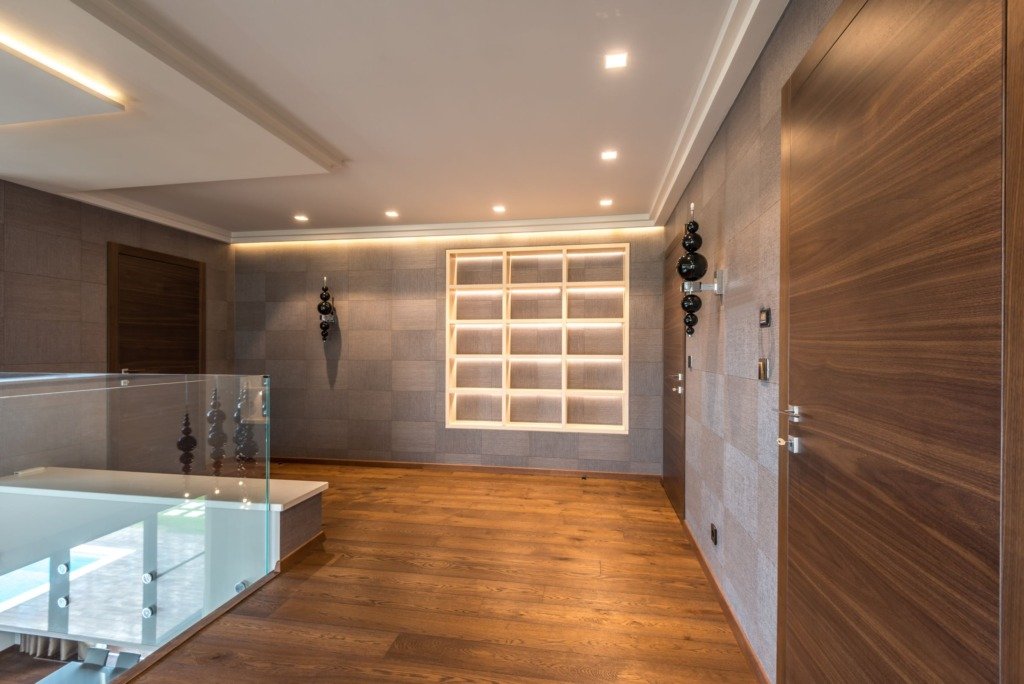
You will find a related discussion in Marble vs Porcelain Flooring in Cairo: Which One to Choose, which covers similar ground from a different angle.
Cove Lighting and the Case for Indirect Light
Cove lighting is the detail that makes a false ceiling worth its cost in most Cairo living rooms. A continuous LED strip recessed into a perimeter drop washes light up the wall and across the ceiling plane, which softens a room in a way a single central fixture never does, and it is particularly effective against Cairo’s strong daylight, where a room needs a gentler evening layer to feel calm rather than overlit.
Material and Finish Considerations
- Standard gypsum board for most drop ceilings, finished with a skim coat and paint to match the wall
- Moisture-resistant gypsum board specified near bathrooms or kitchens, where humidity is higher
- A shadow gap detail at the perimeter instead of a cornice, which reads as more contemporary
- Matte paint finishes over gloss, since gloss shows every imperfection in a ceiling plane under strong light
A ceiling should solve a problem, not just look finished. If it isn’t hiding a service or shaping light, a flat ceiling is usually the better answer.
Choosing the Right Ceiling Type
Full Drop, Perimeter Drop or Floating Panel
A full drop covers the whole room and hides everything above it, which suits a space with messy services. A perimeter drop runs only around the edges, leaving the centre at full height, and works well when you want cove light without losing too much height. A floating panel sits over one zone, such as a dining table or sofa group, and gives the room a focal point.
Match the Ceiling to the Room
Living rooms and reception areas carry the most detail, while bedrooms and corridors do better with restraint. A calm bedroom ceiling helps the room feel restful, and a simple corridor ceiling keeps the eye moving toward the rooms beyond.
Lighting Layers Built into the Ceiling
Recessed Downlights
Downlights give dependable general light, but too many create a spotted, clinical effect. Space them with the furniture in mind so that light falls on tables and work surfaces, not on the middle of an empty floor.
Track and Accent Light
Adjustable spots on a track or recessed accent lights bring out artwork, shelving and textured walls. They suit the living room, where the arrangement of objects changes from time to time.
Dimming and Control
Put each lighting layer on its own circuit with a dimmer, so that the same ceiling can serve a bright family afternoon and a soft evening. Decide the circuits before the ceiling is framed, since changing them afterwards means opening the board.
- Warm light in living and sleeping areas
- Neutral light in kitchens and work areas
- One colour temperature across a connected space so the light feels consistent
Services Above the Ceiling
Air Conditioning Access
Indoor units, ducts and diffusers need clear space and a way to be serviced. Leave an access hatch near any equipment that will need attention, and keep it where it is least visible, such as a corner or inside a cove.
Curtains, Blinds and Fire Safety
A recessed curtain track gives a clean line and hides the fixing, but it must be planned into the ceiling frame from the start. Smoke detectors and sprinklers, where the building has them, should also be coordinated so they are not boxed in or covered over.
Finishing, Maintenance and Cracks
Joints and Movement
Gypsum ceilings can show hairline cracks along joints as the building settles or temperatures change. Properly taped joints, movement gaps at long runs and a good quality skim coat reduce the risk, though no ceiling is entirely immune.
Painting and Upkeep
Use a matt paint in a light tone to reflect light softly and hide small flaws. A ceiling in a kitchen or bathroom may need a washable finish and a touch up every so often.
Working Through the Ceiling Plan with a Designer
What to Prepare
Measure the floor to slab height in each room, photograph any beams or pipes and list where you expect screens, shelving and large furniture. These details let the designer draw a reflected ceiling plan that fits the real room.
Reviewing the Plan Together
A ceiling drawing should be reviewed with the electrician and the AC installer before work begins. A short meeting at this stage prevents the kind of clash that otherwise appears when the frame is already up.
Frequently Asked Questions
Will a false ceiling make my room feel smaller?
It can in a low room if the drop is full and heavy. A perimeter drop with cove light, or a flat ceiling, keeps the room feeling open.
Can I add a false ceiling after the apartment is finished?
Yes, but it is more disruptive, since wiring and painting may need to be redone. It is much easier to plan it before the finishing stage.
Is gypsum the only material for a false ceiling?
No, but it is the most common choice because it is smooth, paintable and easy to shape. Timber, metal or acoustic panels are used where a particular look or performance is needed.
Does a false ceiling help with noise?
Only slightly, unless it is built with insulation or acoustic boards. If noise from the floor above is the concern, mention it early so the build up can be designed for it.
Reserve a false ceiling for rooms where it is doing real work: hiding services, defining a zone, or carrying indirect light. Everywhere else, a flat ceiling protects height and budget.
Sequencing the Work Correctly
A false ceiling has to be decided before electrical and AC contractors finalise their routing, not after, because the whole point is planning the void above it in advance. Deciding late means either an expensive rework or a ceiling that simply boxes in whatever was already installed, which rarely looks intentional and often drops the room further than necessary.
Getting the ceiling plan right this early is part of how Residential Interiors is sequenced from the start, and Al-Shorouk Office Renovation used a mix of false and flat ceilings across a single floor for exactly this reason. Lighting is the other half of this decision, and How Long an Interior Design Project Actually Takes, Stage by Stage covers why decisions like this one need to happen early rather than being left until the finishing stage.

Free guide
Choosing Materials That Last in a Cairo Home
Leave your details and we will email you the guide on this subject straight away.
One guide, no repeat mailings.
Your guide is on its way
Check your inbox in a few minutes. If it is not there, look in your spam folder.