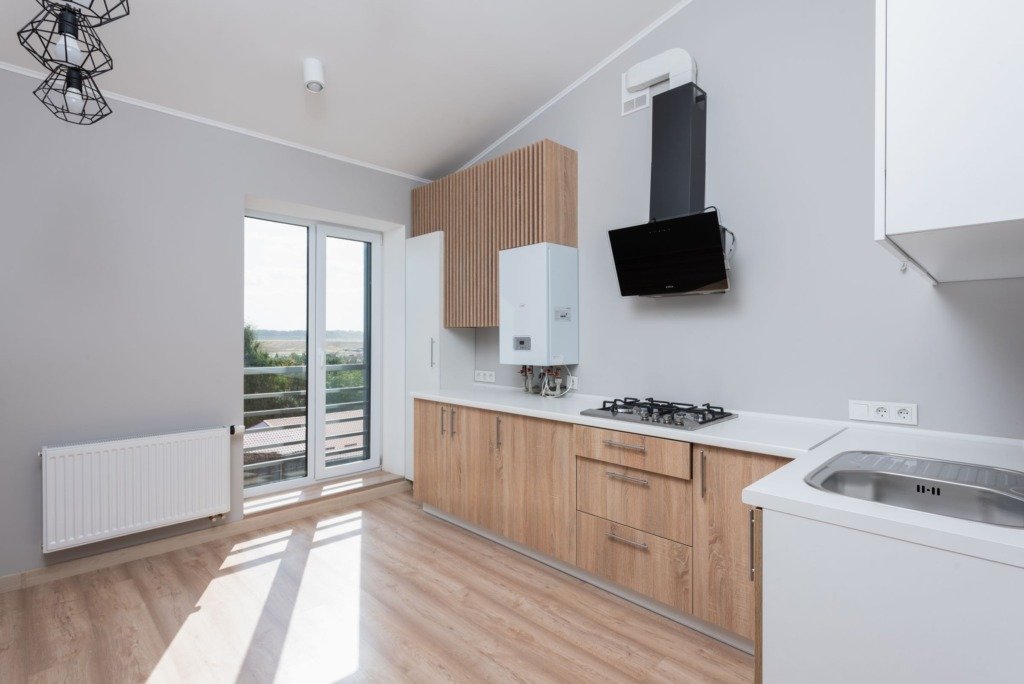
Kitchen cabinet materials in Cairo have to survive more than daily use, they have to survive heat that pushes into the kitchen from an oven and stovetop for hours most days, grease that clings to any surface near the hob, and dust that finds its way in through open windows and balconies for much of the year. The material you choose for the cabinet boxes and doors decides whether your kitchen still closes properly and looks presentable five years from now, or starts warping and peeling within the first two.
This kind of decision comes up constantly in our Residential Interiors projects across Cairo, and it is usually worth settling early rather than late.
Kitchen Cabinet Materials in Cairo: What Actually Holds Up
Solid wood, MDF, laminate and high-gloss acrylic all get sold in Cairo showrooms as premium options, and price alone will not tell you which is right for your kitchen. Each material behaves differently under sustained heat and moisture, and the right choice usually depends on which part of the kitchen the cabinet sits in, not a single blanket decision for the whole room. In a kitchen with a window that gets strong afternoon sun, for instance, cabinets nearest the glass often need a different finish than cabinets in a shaded corner, since UV exposure alone can dull or yellow certain laminates within a few years.
MDF: The Standard Choice, Done Well or Badly
Medium-density fibreboard is what most Cairo kitchens are actually built from, whether the client realises it or not, because it takes paint and veneer finishes evenly and costs less than solid timber. The quality gap is entirely in the density and the edge sealing: a dense, moisture-resistant MDF core with properly sealed edges holds up for many years near a sink or stovetop, while a low-density board with exposed or poorly glued edges will swell and crumble the first time water sits on it. Ask specifically about the board density and whether the edges are sealed, not just what the front face looks like.
Solid Wood: Real Durability at a Real Cost
Solid wood cabinet doors are the most durable option against daily wear, dents and years of opening and closing, but they move with humidity, expanding slightly in the damp of a Cairo winter and contracting in the dry heat of summer, which can show as small gaps at the joints over time. It is also the most expensive option by a wide margin, and it needs a proper protective finish, not just raw wood, to resist grease and steam near the cooking zone.
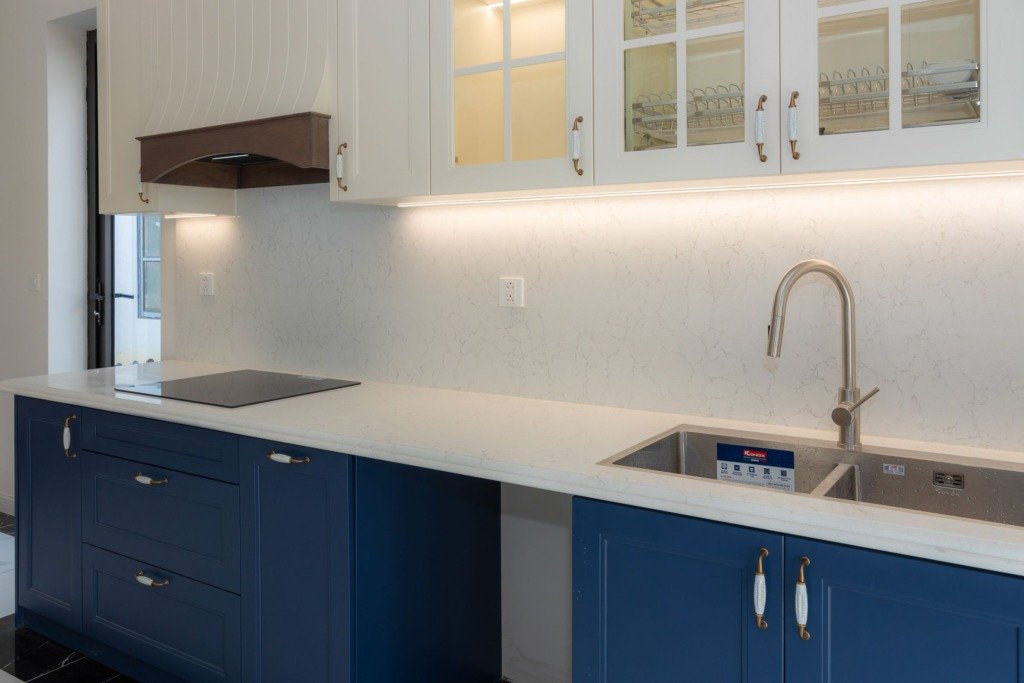
This pairs naturally with a related decision we cover in Is a Kitchen Island Worth It in a Cairo Apartment.
Laminate: Practical and Easy to Clean
- Wipes clean with a damp cloth, which matters directly next to a stovetop that sees oil daily
- Resists scratching better than paint or lacquer finishes on MDF
- Available in wood-look and stone-look finishes that read well under kitchen lighting
- The weakest point is the edge banding, which can lift with age if it was applied poorly
High-Gloss Acrylic: The Look Most Clients Ask For First
High-gloss acrylic delivers the sharp, reflective finish many clients want for a contemporary kitchen, and it is genuinely durable against scratching and fading. Its real weakness in a Cairo kitchen is fingerprints and dust, both of which show up far more visibly on a glossy dark surface than on a matte or textured one, and it needs more frequent wiping to stay looking sharp, particularly on lower cabinets near a busy cooking area.
Hardware and Hinges Matter As Much As the Door Material
The cabinet material gets most of the attention, but hinges and drawer runners fail first in a working kitchen. Soft-close hinges rated for high-cycle use are worth the extra cost on any cabinet opened multiple times a day, and hinges with a wide adjustment range make it easier to correct a door that has started to sag slightly, which happens eventually with any material in a humid kitchen. Cheap hinges are the single most common reason a good-looking kitchen starts to feel tired within two or three years, well before the cabinet material itself shows any real wear. Drawer runners rated for a heavier load also matter more than most buyers expect, especially in a pantry drawer that ends up holding rice, oil bottles and canned goods rather than light utensils.
The material on the door face is only half the decision, the hinge behind it decides whether the cabinet still closes properly in three years.
Planning Order: What to Decide Before the Cabinet Material
Fix the layout and appliances first
Material choice only makes sense once the layout is settled. The position of the hob, sink and oven decides which cabinets face the most heat, steam and splashing, and those are the doors and boxes that need the toughest specification. Changing the layout after a material has been ordered usually means cutting or reordering panels, which costs time and wastes board.
Then the finish, then the hardware
Once the layout is fixed, choose the core material, then the door finish, then the hinges, runners and handles. Treating hardware as the last step is a common mistake, because some finishes and door weights only work with certain hinges. Ask your designer to set all three out together so that nothing is chosen in isolation.
Comparing Joinery Quotes Fairly
Ask every workshop to quote the same specification
Two quotes for the same kitchen can look far apart simply because they describe different boards, different edge treatment or different hardware. Send every workshop the same drawing and the same written list of materials, and ask them to name the core board, the door finish, the edge sealing method and the type of hinge and runner. Only then can you compare like with like.
Look at a real sample, not a catalogue photograph
Ask to handle a finished sample door and a cut section of the board. Check that the edges are sealed all the way round, that the finish looks even under light falling from the side, and that the door sits flat on a table.
Caring for Cabinets in Cairo Heat and Dust
Habits that protect the finish
Wipe grease from doors near the hob regularly, before it bakes on, and dry any water that sits on the base cabinets around the sink. Use a soft cloth and a mild cleaner rather than anything abrasive, since scouring pads dull gloss finishes and wear through thin laminate.
Small checks worth doing each season
- Look at the edges near the sink for any lifting or swelling
- Check that doors still close flush, and adjust the hinges when they drift
- Tighten loose handles and hinge screws before they widen the holes
Preparing for the Kitchen Build
What to bring to the first meeting
Bring photographs of kitchens you like, a list of the appliances you already own or plan to buy, and an honest account of how your household cooks. A family that fries every day and a household that mostly reheats need different surfaces near the hob, and your designer can only plan for what they know.
Lead times and site readiness
Custom joinery is made to measure, so the workshop usually measures only after walls, plaster and services are finished on site. Leave room in the schedule for measuring, fabrication and installation, and do not fix a move in date until the maker has confirmed the programme in writing. If you are abroad during the work, the studio can review samples and progress photographs with you remotely.
Frequently Asked Questions
Which material is best for a Cairo kitchen?
There is no single answer, because the best choice depends on the zone. A dense, well sealed board suits the area around the sink and hob, while a decorative finish can go on cabinets further from heat and water.
Is solid wood always better than engineered board?
Not always. Solid wood is durable but moves with the seasons, and a good moisture resistant board with sealed edges can perform very well when it is built properly.
Should I choose a glossy or a matte finish?
Gloss gives a sharp, contemporary look but shows fingerprints and dust more easily. Matte and textured finishes are more forgiving in a busy household.
Can I choose materials without visiting a showroom?
Yes, much of it can be done through drawings, samples sent to you and video calls, although it is always worth handling a sample door in person where you can.
Choose the densest, best-sealed material for the wet zone around the sink and hob, and save softer or more decorative finishes for cabinets further from heat and moisture.
Cabinet material and hardware selection are among the first decisions made inside Residential Interiors, and Villa Basement Spa & Pool mixed a dense, moisture-resistant MDF near the wet zone with a warmer solid wood finish on the island for exactly this reason. Once the cabinet material is settled, the conversation naturally moves to what sits on top of it, which Choosing Kitchen Countertops for a Cairo Climate covers in detail.

Free guide
Choosing Materials That Last in a Cairo Home
Leave your details and we will email you the guide on this subject straight away.
One guide, no repeat mailings.
Your guide is on its way
Check your inbox in a few minutes. If it is not there, look in your spam folder.