A surprising number of people trying to brief an interior designer in Cairo open with an apology: I am sorry, I do not really know what I want. It is offered as a weakness and it is very nearly the opposite. Clients who arrive without a fixed answer tend to end up with better houses, because nothing has been ruled out before the room was understood. It is how a good share of enquiries from Cairo and New Cairo begin, and it is not a problem.
It’s a detail we address as standard whenever we take on Consultation for a Cairo home.
What a designer needs from you is not a style. It is evidence about how you live. Here is how to produce it without pretending to be a designer.
How to Brief an Interior Designer in Cairo: Start With What Is Wrong
Missing is a solution in disguise. It needs an island, it needs more storage, it needs to be brighter. Wrong is data. Nobody sits in this room. We eat standing up. The hallway is always full of shoes. I avoid the study after four because the glare is unbearable.
Write ten sentences of wrong. It will take twenty minutes and it will outperform any mood board you could assemble.
Describe the symptom, not the prescription. The prescription is the part you are hiring for.
Answer five questions honestly
- Where does everyone actually end up, regardless of where the furniture suggests they should
- What in this home do you already love and would defend
- What would you never do again, in this house or the last one
- Who else lives here, visits often, or has to be designed around
- What has to be true for this to have been worth doing
The last one is the brief. Most people, pushed, do not say a particular look. They say something like I want to be able to have twelve people over without it being stressful, or I want the mornings to be calmer. Those are designable. A colour palette is not a goal, it is a means.
For a closer look at a related piece of the puzzle, see Virtual vs In-Person Design Consultation: What Each One Gets You.
Use images as evidence, not instructions
Collect freely, then interrogate what you collected. If eleven of your twelve saved rooms have windows on two sides, the thing you like may be daylight rather than the furniture in them. If they are all photographed empty, you may be responding to order rather than to a style.
Then collect five you actively dislike. Rejections are far more specific than approvals and they draw the boundary a designer needs.
Say the constraints out loud early
Budget range, timing, the relative you cannot rehouse during works, the neighbour who complains, the fact that you hate open shelving because you know you will never keep it tidy. Constraints are not obstacles to a design, they are its shape. A designer who learns them in month three has to unwind work that was already done.
What not to worry about
Style names. Whether it should be described as minimal, warm, modern or classic is a question that resolves itself once the practical decisions are made, and arguing it in advance narrows the design for no benefit.
Preparing for the First Conversation
Gather what you already have
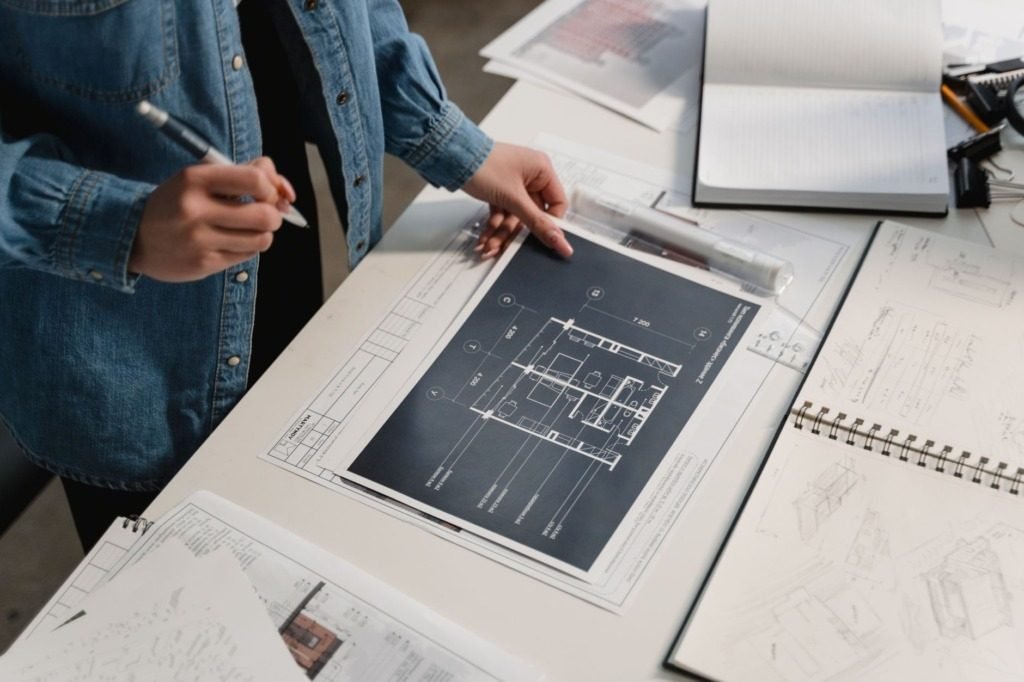
Before the first call, collect the plans you have, photographs of each room and a short list of what is staying. None of this needs to be tidy. A phone photo taken from the doorway tells a designer more than a long description, and a rough sketch of the layout is better than none at all.
Keep a running note
For a week, jot down every moment the home annoys you or pleases you. A chair nobody uses, a corner that is always cluttered, the one spot where you actually relax. Patterns appear quickly, and they become the backbone of the brief.
Living Patterns That Shape a Design
Your daily routine
Describe an ordinary weekday from waking to sleeping, room by room. Where do bags land, where is the phone charged, where do guests sit when they stay late. A layout that follows your routine feels effortless, and one that ignores it feels wrong for reasons nobody can name.
Occasional and seasonal use
Mention the days that are not ordinary: family gatherings, long visits, holiday meals, summers when everyone is home. A home is often judged on its busiest day, so the designer needs to know what that day looks like.
Storage and belongings
- What you own now that needs a proper home
- What you plan to buy in the near future
- What you rarely use but cannot part with
- What is sentimental and should stay visible
Reading Your Own Taste
Notice what you reach for
Look at the clothes you wear most, the objects you keep on your desk and the hotels you remember. Taste shows up in small repeated choices long before it shows up in a mood board.
Texture and comfort
Many people know they like a room before they can say why. Often the answer is texture: soft against hard, matte against polished, warm wood against cool stone. Tell the designer how you want to feel in each room, and let the materials follow.
Making Decisions in a Sensible Order
Not knowing what you want is easier to handle when decisions come in the right sequence. Each stage narrows the next one, so nothing has to be decided too early.
Plan first
Agree how the rooms work and where furniture sits before talking about colour or finish. A good plan survives any style, while a good style cannot rescue a poor plan.
Test samples in your own light
Cairo light is strong and changes through the day, so a colour that looks calm in a shop can look harsh at noon. Keep samples in the room and look at them in the morning, at midday and in the evening before deciding.
Allow for lead times
Made to measure and imported items take time to arrive. Settle them early, and keep the quick decisions such as accessories and styling for the end.
Staying Involved Without the Stress
Review calls with a clear purpose
A short review with a clear question works better than a long open discussion. Come with one or two decisions to make, and leave with them made.
Working with the studio from a distance
If you live outside Cairo, the whole brief can be shared through photographs, a video walkthrough and a few calls. Samples can be posted so you can handle them yourself, and decisions are written down so nothing depends on memory.
Frequently Asked Questions
Do I need a mood board before the first call?
No. Photographs of your own rooms and a few honest sentences about what is wrong are more useful than any collection of images.
What if my partner and I want different things?
That is common and workable. Each of you writes your own list of what is wrong and what matters, and the designer looks for the overlap before proposing anything.
How detailed should my brief be?
Detailed enough to describe how you live, and loose enough to leave room for ideas. Ten honest sentences about each problem room are plenty to begin.
Can I brief a designer without visiting the studio?
Yes. Photographs, a video walkthrough and a measured plan are enough to begin, and calls handle the rest.
What if I change my mind after the brief is agreed?
Tell the studio as early as you can. Early changes are simple, while late ones may affect drawings, orders and the schedule.
Write ten sentences describing what is wrong with the space as you experience it. Send that instead of a mood board and the first conversation starts a stage further along.
A short paid session is designed for exactly this position, where the problem is real and the answer is not obvious yet, which is what Consultation is for. Bedroom Concept Studies shows how a loose brief resolves into something specific, and What To Prepare Before Meeting An Interior Designer covers what to bring once you are ready to talk.

Free guide
Working With an Interior Designer: What to Expect
Leave your details and we will email you the guide on this subject straight away.
One guide, no repeat mailings.
Your guide is on its way
Check your inbox in a few minutes. If it is not there, look in your spam folder.