Villa staircase design in Cairo carries more weight than staircases typically do in an apartment renovation, simply because a multi level villa in New Cairo or Sheikh Zayed usually places the stair somewhere near the entry, making it one of the first things a guest sees and, done well, one of the features they actually remember about the house rather than a purely functional connector between floors.
It’s a detail we address as standard whenever we take on Residential Interiors for a Cairo home.
Treating the staircase as a design centerpiece rather than an afterthought changes several decisions early in a project, tread material, railing design, and how the stairwell is lit, all need to be planned alongside the entry and living spaces rather than finalized separately once the rest of the villa is already designed.
Tread Materials and What Holds Up
Marble treads look spectacular and are common in higher end Cairo villas, but they need a honed or textured finish rather than a full polish, since a polished marble tread becomes genuinely dangerous underfoot, particularly for a household with young children or older family members using the stairs daily. Timber treads feel warmer and quieter underfoot and pair naturally with a wood or metal railing, though they do need a durable sealant to handle years of daily traffic without scuffing.
Engineered stone and large format porcelain have both become popular alternatives for treads, offering a convincing stone look with far more consistent slip resistance and none of marble’s maintenance demands, a trade off that suits the busier household staircases we design for most often.
Villa Staircase Design in Cairo Depends Heavily on Lighting the Stairwell
A stairwell is one of the hardest spaces in a villa to light well, because it spans multiple floors and rarely gets even natural light throughout the day. Overhead pendant lighting works for the upper volume of a double height stairwell, but it needs to be paired with step level or wall mounted fixtures lower down so the treads themselves are properly lit, not just the open air above them.
Recessed LED strip lighting under the handrail or along the base of each tread has become a favourite detail in the villas we design, since it lights the actual walking surface directly and adds a genuinely dramatic effect after dark without relying solely on an overhead fixture that leaves the lower treads comparatively dim.
A staircase is the one piece of architecture in a home that everyone in the household touches, sees, and uses multiple times a day, which is exactly why it deserves more attention than it usually gets.
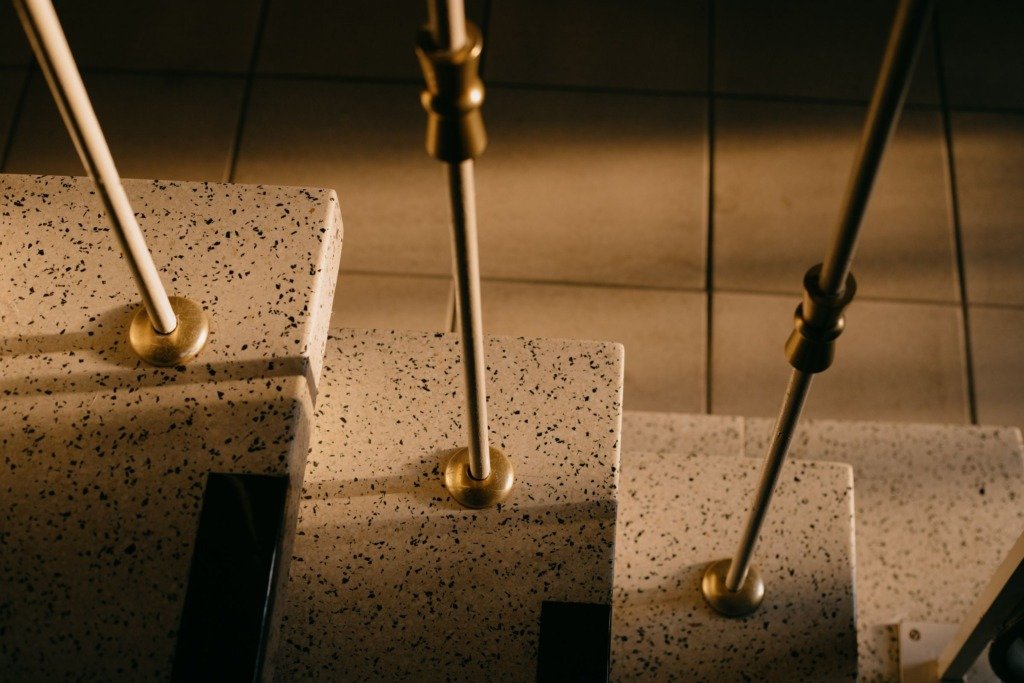
For a closer look at a related piece of the puzzle, see Choosing Finishes That Still Look Good in Five Years.
Railing Design, Safety, and Style
A railing has to satisfy structural safety requirements first and aesthetic preference second, though the two are not actually in conflict as often as people assume. Vertical metal balusters read as more contemporary and allow more light through the stairwell than a solid glass or timber panel. Glass panel railings maximize light and visual openness, a genuine advantage in a stairwell that otherwise has limited natural light of its own, though they need regular cleaning to stay looking sharp against Cairo’s dust.
- Baluster spacing should stay under ten centimetres to keep the stair safe for young children
- Handrail height typically sits between ninety and one hundred centimetres for comfortable adult use
- Glass panels need tempered safety glass rated for the specific span and height of the stairwell
- A contrasting nosing strip on each tread improves visibility and reduces the chance of a missed step
How the Staircase Connects to the Rest of the Home
The material and finish chosen for the stair should echo something already present elsewhere in the entry or living space, the same timber tone as the entry console, or a stone tread that picks up a vein pattern used in the entry flooring, so the stair reads as part of one considered design rather than an isolated feature dropped into the floor plan.
Natural light from a nearby window or skylight, common in the double height entries typical of Sheikh Zayed and New Cairo villa layouts, should be allowed to reach the stairwell itself where possible, since daylight on a staircase does more for how grand it feels than almost any single material choice.
Common Mistakes We See
The most common mistake is polishing marble treads to a full shine purely for the visual effect, creating a genuine safety hazard in the process. The second is under-lighting the lower treads of a double height stairwell, leaving the most used part of the stair the darkest. The third is choosing a railing style disconnected from the rest of the home’s material language, so the staircase ends up looking like it belongs to a different project.
What Shapes the Brief for a Villa Staircase
Before any material is chosen, the first question is how the stair will actually be used. A villa with a large family, regular guests and a household team moving between floors needs a different staircase from a quiet home where the stair is mostly crossed in the evening. The answers change the width, the finish and how much wear the treads need to take.
Open or Enclosed Stairwell
An open stair in a double height entry is a sculptural gesture, but it also carries sound, cooking smells and air conditioning between floors. An enclosed stairwell is quieter and easier to control, though it needs more care with light so it does not feel like a corridor.
Planning Order: When the Stair Gets Decided
The staircase touches structure, flooring, lighting, joinery and electrical work, so it cannot be left to the end. The smoothest projects settle the position and form of the stair first, then the materials, then the railing and lighting details, and only then the final finishes.
- Confirm the position, width and shape of the stair with the architect or engineer before interior finishes are chosen
- Choose the tread material together with the entry flooring so the two meet cleanly
- Decide the railing type early, because glass, metal and timber each need different fixings built into the structure
- Place lighting points and cable routes before walls and ceilings are closed
Working With Stone, Timber and Metal Makers
Most villa stairs combine stone or timber treads, a metal or glass railing and a fitted handrail, and each is made by a different trade. Dimensions should be taken from the built structure rather than the drawings alone, because small differences on site add up across a full flight.
Samples and Lead Times
Stone, glass and fabricated metal are rarely held in stock, so lead times are longer than for ordinary finishes and should be asked about early. Always look at a physical sample of the tread finish on a step, inside the stairwell, at different times of day.
Cairo Dust, Heat and Daily Upkeep
Cairo dust settles quickly on horizontal surfaces, and a staircase has plenty of them. Treads with a fine texture hide dust better than very dark smooth ones, and a railing with fewer small details is easier to wipe. A finish that needs special products or regular resealing is a real commitment, so be honest about who will maintain it.
Comparing Quotes for Staircase Work
Quotes for stair work are hard to compare because the scope often differs between suppliers. One may include the railing and fixings while another lists only the treads. Ask each supplier to itemise what is included, who takes the final measurements, who installs, and who makes good afterwards.
Frequently Asked Questions
Can an existing staircase be updated without rebuilding it?
Often yes. The treads can be resurfaced, the railing replaced and lighting added while the structure stays as it is. A site visit confirms what the existing stair can take.
Is a glass railing suitable for a family with young children?
It can be, provided a qualified professional specifies the glass and fixings for the span and height, and the design leaves no gaps a child could climb or slip through.
Should the staircase match the rest of the villa?
It should relate to it rather than copy it. Repeat a tone, a texture or a line from the entry so the stair feels part of the same home without becoming repetitive.
What should I prepare before a staircase consultation?
Bring the architectural drawings if you have them, photographs of the entry and of any stair you admire, and a short list of who uses the stair daily.
A villa staircase works as a design centerpiece when tread material, railing, and stairwell lighting are planned together from the start, with slip resistance and lighting at the tread level treated as non negotiable rather than secondary to how the stair looks in a rendering.
We carried the entry’s timber tone up through the tread nosing and railing detail on Villa Exterior Project, one of the signature moves in the full Residential Interiors scope for that villa, and for more on how a home’s material choices should connect room to room, Choosing Egyptian Marble for Your Home: A Practical Guide is a natural next read.

Free guide
Choosing Materials That Last in a Cairo Home
Leave your details and we will email you the guide on this subject straight away.
One guide, no repeat mailings.
Your guide is on its way
Check your inbox in a few minutes. If it is not there, look in your spam folder.