Choosing wallpaper for a Cairo home is really a question of where in the home, not whether to use it at all. Wallpaper has a real advantage that paint doesn’t: pattern, texture, and depth that a flat colour simply cannot deliver on its own. But it also has real limits in a climate with strong heat, dust, and pockets of humidity, and those limits decide where it belongs far more than personal taste does.
It’s a detail we address as standard whenever we take on Residential Interiors for a Cairo home.
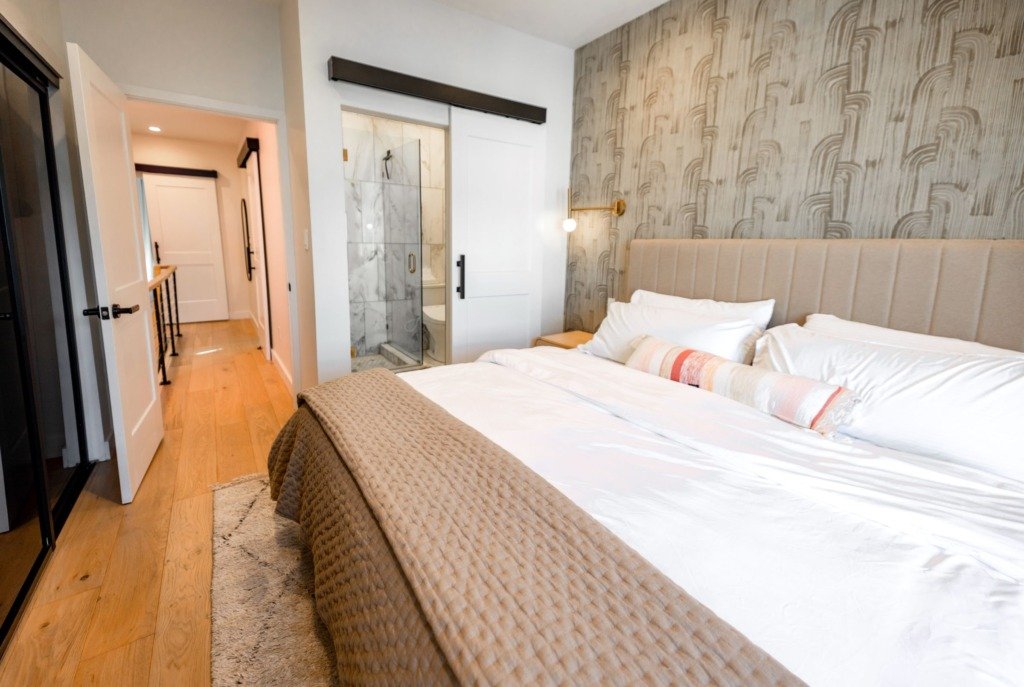
The rooms that work best for wallpaper are dry, temperature-stable, and don’t see direct water contact. A bedroom feature wall behind the headboard, a study, or a hallway are the classic candidates, and for good reason: they stay dry, they’re viewed at a comfortable distance rather than up close every day, and a bold pattern in one of these spaces reads as a considered design choice rather than an overwhelming one.
Choosing Wallpaper for a Cairo Home: Where It Genuinely Works
- A single accent wall in a bedroom, ideally behind the bed where it becomes a backdrop rather than a busy surface you face daily
- A hallway or entry wall, where a striking pattern greets you without dominating a room you sit in for hours
- A home office or study wall, where texture adds warmth to a space that otherwise leans functional
- A powder room, in small doses, where the room’s size means the pattern reads as jewellery rather than wallpaper covering every wall
Where to Avoid It Entirely
Kitchens and bathrooms are the two rooms where wallpaper consistently fails in a Cairo home, and it’s worth being direct about that rather than letting a beautiful pattern talk you out of the practical reality. Steam, grease, and daily humidity work against the adhesive and the paper itself, and even a vinyl-coated option struggles near a shower or a stovetop over years of constant moisture exposure.
For a closer look at a related piece of the puzzle, see Choosing a Dressing Table for a Cairo Bedroom.
Vinyl-Backed Versus Paper-Backed
This distinction matters more in Cairo than in a milder, drier climate. Paper-backed wallpaper is more breathable and often has richer texture, but it’s genuinely vulnerable in any room with fluctuating humidity, and edges can lift where the wall itself sweats slightly during a humid spell. Vinyl-coated or vinyl-backed wallpaper is more forgiving, wipeable, and a safer default for most Cairo homes, even in rooms that aren’t full wet areas but see general daily humidity.
- Vinyl-coated paper for any room with moderate humidity or daily wear, including hallways and living areas
- Paper-backed or grasscloth options reserved for genuinely dry, low-traffic rooms like a formal bedroom
- Pre-pasted vinyl for easier installation and better long-term adhesion in a climate with heat swings between rooms
- Removable peel-and-stick vinyl for a rented apartment or a room you expect to change again within a few years
Preparing the Wall Before Installation
Wallpaper only performs as well as the wall underneath it, and this step gets rushed more often than any other part of the process. A freshly plastered wall in a Cairo apartment needs to fully cure and dry before paper goes up, since residual moisture trapped behind the paper is one of the fastest ways to cause bubbling and peeling within the first few months. A skim coat and a proper lining paper, rather than applying wallpaper directly to raw plaster or old paint, also gives a smoother, more even surface for the pattern to sit on and makes any future removal considerably easier.
Pattern Scale in a Cairo Apartment
Room size should guide pattern choice as much as personal taste does. A large, bold print can overwhelm a smaller Cairo bedroom, especially one already working with a lower ceiling, while a fine, subtle texture or a smaller repeat pattern often reads as more sophisticated in a compact space and avoids making the room feel like it’s closing in. In a larger room with higher ceilings, a bolder pattern has the space to breathe and becomes the intended focal point rather than an overwhelming one.
Wallpaper rewards a room that stays dry and stable. Ask it to survive steam or splashback and it will fail faster than almost any other finish in the house.
Choosing Colour and Texture
Reading the Light
Wallpaper changes character with the light. A shade that looks warm in a showroom can turn flat or cold in a room that receives little daylight, so view a large sample on the actual wall at different hours before deciding.
Texture Over Pattern
Texture can add depth without the busyness of a strong print. Subtle relief catches the light gently and forgives small imperfections in the wall.
Colour and Mood
Deeper tones suit a bedroom used mostly in the evening, while lighter tones keep a hallway open. Remember that wallpaper influences the colour of everything near it, including the furniture and the curtains.
Planning the Installation
Choosing the Installer
A good installer matters as much as a good paper. Ask to see previous work, particularly at corners, around sockets and at the joins, where careless work shows first.
Ordering Enough
Order all rolls from the same batch at once and keep a spare. Colours can vary slightly between batches, and a pattern may no longer be available if a repair is needed later.
Sockets, Switches and Fittings
Plan around them. Remove the covers before hanging, and think about how a pattern will sit around a headboard, a mirror or a wall light.
Pattern Matching and Allowance
Larger repeats use more paper, so a bold design needs more allowance than a plain one. Your installer can advise on the quantity once the wall is measured.
Living With Wallpaper
Cleaning and Care
Dust the surface gently and wipe marks with a soft, barely damp cloth where the material allows. Avoid harsh cleaners that can lift a print or dull a finish.
Sun and Fading
Direct sun can fade a print over time, so choose a protected wall or fit curtains on windows that face strong light.
Furniture and Family Life
Keep furniture slightly clear of the wall where possible, since constant rubbing marks the surface. In a child bedroom, a wipeable finish saves a great deal of worry.
When Paint or Panelling Is the Better Answer
Paint for Busy Walls
Paint is the better choice for kitchens, bathrooms and walls that are touched constantly. It is also the easiest finish to refresh when your taste or your furniture changes.
Panelling and Textured Plaster
Wall panelling or a textured plaster finish gives depth where wallpaper is unsuitable, and copes better with heat and knocks.
Mixing Finishes
One papered wall with painted walls around it is calmer than papering every wall. Pick one colour from the paper for the paint so the two belong together.
Choosing Remotely and Preparing
Samples and Photos
We can shortlist options from drawings and photos, but a physical sample should always be checked on your own wall in your own light.
What to Prepare
- Photos of the wall in morning and evening light
- Wall measurements including windows and doors
- A note of which walls receive sun or damp
- Any furniture that will sit against the wall
Frequently Asked Questions
Can wallpaper go over old paint?
Sometimes, but the surface must be sound, clean and smooth. Flaking or glossy paint should be prepared first, and a lining layer is recommended.
Can wallpaper be removed easily?
It depends on the material and how the wall was prepared. Good preparation makes removal far easier later.
Is wallpaper suitable for a rented apartment?
A removable type can be, once you have checked with the landlord.
Does wallpaper suit a small room?
Yes, with a smaller repeat or a quiet texture, ideally on one wall.
Can wallpaper be used near an air conditioner?
Yes on a dry wall, but avoid positions where condensation or drips could reach the paper.
Treat wallpaper as a feature-wall material for bedrooms, hallways, and studies in a Cairo home, and default to paint or tile in any room with regular moisture or heat swings.
Wall finish decisions like this one are part of the broader palette planning built into Residential Interiors, and Bedroom Concept Studies used a single patterned accent wall in its main bedroom for exactly this reason, keeping the rest of the apartment in solid colour. For the paint side of that same decision, Choosing Paint Colours That Work With Cairo’s Light covers how to choose tones that hold up under Cairo’s strong natural light.

Free guide
Choosing Materials That Last in a Cairo Home
Leave your details and we will email you the guide on this subject straight away.
One guide, no repeat mailings.
Your guide is on its way
Check your inbox in a few minutes. If it is not there, look in your spam folder.