Choosing wall art for a Cairo home is usually the last decision made in a room and the first thing that makes it feel unfinished if it is done carelessly, a few frames bought quickly to fill blank wall space rather than chosen and arranged with any real logic. Scale, arrangement and a clear point of focus decide whether a wall reads as considered or as an afterthought, far more than the individual pieces themselves.
It’s a detail we address as standard whenever we take on Residential Interiors for a Cairo home.
Most people buy wall art the way they buy small decor items, one piece at a time, whenever something catches their eye, which is exactly how walls end up with an odd scatter of unrelated pieces that never quite come together as a room.
Choosing Wall Art for a Cairo Home: Getting the Scale Right
A single piece of art should generally cover roughly 60 to 75 percent of the width of the furniture it hangs above, a sofa, console or bed headboard, so it neither disappears above a large piece nor overwhelms a small one. Hung too high, art reads as disconnected from the furniture below it, so the general rule is to centre the piece so its middle sits at roughly eye level, around 145 to 150cm from the floor, or 15 to 20cm above the top of the furniture it is paired with, whichever leaves less awkward empty space.
Gallery Walls vs a Single Statement Piece
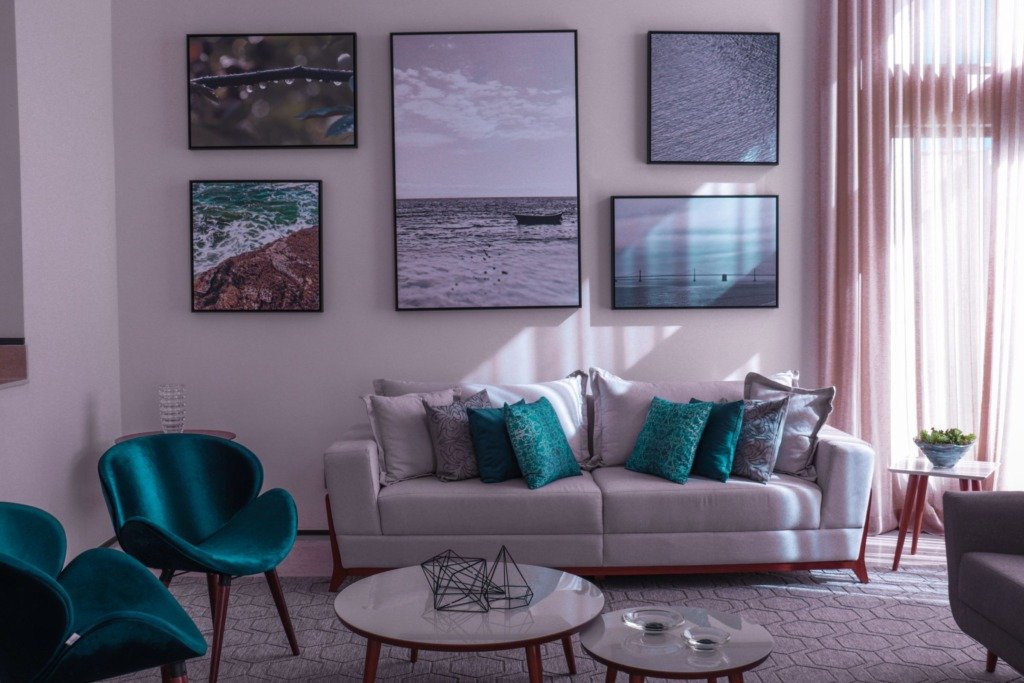
A gallery wall works well when you already own a collection of smaller pieces, photographs, prints, art from different sources, that need a unifying logic rather than a single obvious pairing with one piece of furniture. Keep spacing consistent, generally 5 to 8cm between frames, and anchor the arrangement to one dominant piece rather than scattering equally sized frames evenly, which tends to read as busy rather than curated. Photograph the arrangement once it is finalised on the floor, since it is far easier to adjust spacing on paper than to re-hang several frames after the first nail is already in the wall. A single large statement piece, by contrast, suits a room that already has a strong focal point, a fireplace wall, a striking piece of furniture, and does not need competing visual interest nearby.

For a closer look at a related piece of the puzzle, see False Ceiling Design in Cairo: When It's Worth It.
Framing and Materials for This Climate
Strong, direct sunlight through much of the year fades unprotected prints and inexpensive frames faster here than in a climate with softer light, so UV-protective glass or acrylic is worth the extra cost for any piece hung on a wall that gets direct sun for part of the day. Original paintings and higher-value pieces deserve proper framing and placement away from direct light entirely, on an interior wall rather than one facing a large west-facing window. A west-facing living room wall in a New Cairo apartment, common in many newer developments, is exactly the kind of spot where this precaution earns its cost within the first year or two.
Arranging Art Around Furniture, Not Just the Wall
- Measure the actual furniture piece before ordering or framing art, not the blank wall space alone, since the two rarely have the same proportions
- Group frames on the floor first to test spacing and arrangement before a single nail goes into the wall
- Leave breathing room around a grouping, a wall covered edge to edge with no margin reads as cluttered rather than curated
- Mix frame finishes deliberately, wood, metal, matching mattes, rather than by accident from buying pieces at different times
How Many Pieces a Room Actually Needs
Every wall in a room does not need art, and trying to fill each one usually produces a busier, more cluttered result than choosing two or three walls to focus on properly. A living room generally reads best with one dominant piece over the sofa or console, a secondary smaller grouping elsewhere, and at least one wall left genuinely empty or reserved for something functional like a mirror or shelving. Bedrooms need less: often just one piece above the headboard is enough, since a room used mainly for sleeping benefits from calm, uncluttered walls rather than a busy arrangement competing with everything else in a small space.
Hold the art up against the wall and stand back before committing to a single nail hole, height is the mistake nobody notices until it is already hung.
Planning Order for Hanging Art
Settle the room before the art
Art works best when the sofa, rug, curtains and lighting are already in place. Colours and proportions are easier to judge against real furniture than against a plan, and the wall will often tell you what it needs once the room is furnished.
Make paper templates
Cut paper to the size of each frame and tape it to the wall. Leave it for a day or two and walk past it at different times. This costs nothing and reveals problems with scale and height long before a drill is involved.
Colour, Mood and Subject Matter
Let the room supply the palette
Pick two or three colours already present in the room, a cushion, a rug, a piece of wood, and look for art that echoes them. It does not need to match exactly. A shared undertone is enough to make the piece feel at home.
Choose subjects you will not tire of
Art you look at every day should reward a second and third glance. Abstract work, landscape, calligraphy and quiet photography tend to age well, while very literal or novelty images can feel tiresome faster than expected.
Hanging and Fixing Safely
Match the fixing to the wall
Concrete, brick and plasterboard each need a different plug or fixing, and a heavy frame on the wrong one will eventually pull away. Ask whoever hangs the pieces to confirm the wall type before drilling, and use two points for any large frame so it stays level.
Think about light and glare
Glass reflects windows and lamps, so a framed piece opposite a bright window can be hard to see at certain hours. Check the view from where people usually sit, and consider a gentle picture light if the wall is dark in the evening.
Buying Art and Comparing Quotes for Framing
Framing quotes vary widely because the materials differ. Before comparing totals, ask each framer the same questions.
- Is the glass protective against sunlight and is the backing acid free
- Is the mount cut from archival board that will not yellow
- How is the piece fixed inside, and can it be removed later without damage
- Is hanging hardware included and rated for the weight of the frame
- How long does production take and how is the finished piece delivered
Lead times for custom frames and printed work are worth asking about early, since art is often the last item ordered and the first thing people want to see on the wall.
Working Remotely on Styling
Styling can be planned from photographs of each wall with measurements noted beside them. A scaled layout shows where every piece goes, and hanging is then a matter of following the drawing, which can be done by a trusted installer in Cairo while you follow along by video.
Frequently Asked Questions
What height should I hang art
Aim for the centre of the piece to sit near eye level, and lower it slightly when it hangs above furniture so the two read as one group.
Should frames match each other
Not necessarily. A mix can look rich if it is deliberate, with a shared finish or colour tying the group together.
Can I hang art in a bathroom or kitchen
Yes, but choose sealed frames and pieces that tolerate steam, and keep them away from the hob and the shower.
What if I do not know what art I like
Collect images of rooms and pieces you are drawn to and look for patterns in colour, subject and mood. Those patterns point to your taste faster than browsing shops does.
Can the art be chosen without visiting the studio
Yes. Photos, measurements and a mood board are enough to build a styling plan that can be reviewed together online.
Size art to the furniture beneath it and commit to one clear point of focus, a wall of unrelated pieces at random heights never quite reads as finished.
Wall art and final styling decisions are typically the last stage inside Residential Interiors, and Bedroom Concept Studies used a single large statement piece over the main sofa rather than a scattered gallery wall, once the room’s other elements were settled. Styling usually happens once construction and furniture are already in place, and How Long an Interior Design Project Actually Takes, Stage by Stage shows roughly where this stage falls in a typical project.

Free guide
Choosing Materials That Last in a Cairo Home
Leave your details and we will email you the guide on this subject straight away.
One guide, no repeat mailings.
Your guide is on its way
Check your inbox in a few minutes. If it is not there, look in your spam folder.