Two years into a new home, the rug has a pale band where the afternoon sun lands, one arm of the sofa no longer matches the other, and a timber floor has changed colour in a stripe that follows the window. In a climate with this much sun, fading is not an unlucky outcome. It is the predictable result of choices made when the materials were selected.
The answer is not living behind closed curtains. It is choosing materials that hold their colour where the sun actually falls, and controlling the light that does the most damage.
What Actually Causes It
Ultraviolet light does most of the damage, visible light adds to it, and heat accelerates everything. That combination is why a west facing Cairo room ages materials faster than almost any interior condition, and why the damage concentrates in a narrow band that moves across the room through the year.
The Materials That Suffer Most
- Natural dyes and untreated natural fibres, especially silk, which is the least sun stable material in common use
- Bright and deep colours, particularly reds and blues, which shift long before neutrals do
- Unprotected timber, which both fades and darkens unevenly depending on the species
- Artwork and photographs on paper, which are damaged permanently and quickly
- Some plastics and laminates, which yellow rather than fade
The Materials That Hold Up
- Solution dyed acrylic and solution dyed polyester, where colour is part of the fibre rather than applied to it
- Wool, which is considerably more stable than silk or cotton
- Porcelain and stone, which do not fade at all and are the reason floor choices matter
- Powder coated metal and lacquered finishes with ultraviolet inhibitors
Where the sun falls, choose materials whose colour is part of the fibre. Everything else is a slow countdown.
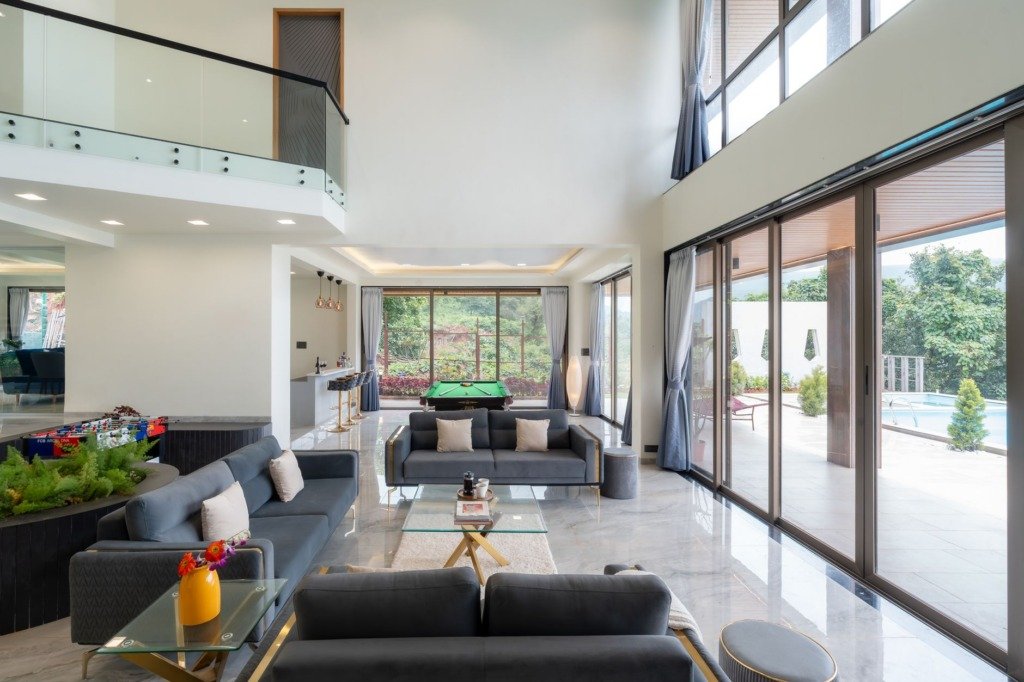
Controlling the Light Without Losing It
Most fading is prevented at the window rather than on the sofa, and none of it requires a dark room.
- Solar control film on west and south facing glass, which removes the majority of ultraviolet and is invisible
- Sheer blinds that diffuse light during the worst hours while keeping the view
- External shading, which is the most effective of all, where the compound permits it
- Museum or conservation glass for anything on paper that matters
Arrangement, Which Costs Nothing
Some of the best protection is free. Keep the most valuable and least stable pieces out of the direct band of sun, which is usually a strip two to three metres from a west window. Rotate rugs and reversible cushions twice a year so the fading is even rather than striped, since even fading reads as age and uneven fading reads as damage. Where a floor will be partly covered by a large rug for years, consider that the uncovered part will change colour around it.
Sun Damage and Fading in Cairo Homes, Decided Early
At specification stage this costs nothing. A solution dyed fabric is not more expensive than a vulnerable one, a wool rug is a normal choice, and a film on the glass is a small item in a fit out. Afterwards, the same decisions mean replacing furniture. This is one of the clearest cases in a Cairo home where the right choice is simply the informed one.
What Shapes the Brief for a Sunny Room
Which Way the Windows Face
A room facing west takes the strongest light in the afternoon, a room facing south takes it for much of the day, and a room facing north takes very little. The same sofa can last in one room and fade in another, so the brief should begin with the direction of the glass.
Which Pieces Matter Most to You
An inherited rug, a favourite chair and a framed photograph do not all deserve the same protection. Decide which pieces cannot be replaced, and give those the safest spots in the room, away from the direct band of sun.
When the Room Is Actually Used
A living room used mostly in the evening still takes the full sun while it is empty during the day. Fading does not care whether anyone is sitting there, so the usual pattern of use should not be mistaken for protection.
Planning Order, So the Sun Is Considered Early
Sun control is cheap when it comes first and expensive when it comes last. The sequence below keeps it in the right place.
Read the Light Before Choosing Anything
Visit the room at different times of day and note where the sun lands and how far it reaches. The studio does this on the first visit, because the pattern of light is the best guide to where the risk is.
Treat the Glass Before Furnishing
Film, shading and blinds are easiest to install in an empty room. Treating the glass first means every piece that arrives afterwards is already protected.
Choose Fabrics and Floors With the Window Wall in Mind
The materials nearest the glass work hardest, so they get the most stable choices. Pieces further from the window can afford to be more delicate.
Place the Furniture Last
Arrange the room once the light is understood, with the most vulnerable pieces outside the sun and the sturdy ones taking the exposed positions.
Floors and Fading
Timber Floors
Timber reacts to light in its own way, and some species darken while others lighten. Ask which way your chosen timber moves, and choose a finish that offers some protection. Expect the exposed band to differ from the shaded part of the floor.
Stone, Porcelain and Tile
Fired and mineral surfaces hold their colour in the sun, which makes them the calm choice beside large windows. Warmth can then come from the rugs and furniture that sit on top.
Rugs and Carpets
A rug laid across a sunny floor will fade in its own pattern. Choose stable fibres for rugs in the light, and move them from time to time so no one area takes all of it.
Curtains, Blinds and Layered Light
Two Layers Work Better Than One
A sheer layer softens the light all day, and a heavier lined curtain closes when the sun is at its worst. Together they let you choose between a bright room and a protected one without losing the view.
The Lining Does the Protecting
A curtain without lining takes the sun on its face and fades in the folds. A good lining shields the outer fabric, and a pale one also reflects some heat back out of the room.
Looking After What You Already Own
- Move delicate pieces out of the direct band of sun, even if it means a less perfect arrangement
- Keep framed paper and photographs on walls the sun never reaches
- Close the lined curtains when the room is empty during the strongest light
- Turn cushions and rotate rugs so wear and fading spread evenly
What Can Be Done After Fading Has Started
Colour that has gone does not come back, but the damage can be stopped. Treat the glass, move the piece, and decide whether to live with the softer colour or re-cover the item in a stable fabric.
Comparing Quotes and Lead Times
When two quotes for soft furnishings differ, check what the fabric is made of, not only how it looks. A stable fibre and a vulnerable one can look the same in the showroom and part ways within a season.
Ask for the Fibre and the Dye Method
Ask the supplier to state the fibre and how the colour is added. A written answer is worth more than a verbal reassurance, and it goes into the care file for the room.
Allow Time for Made to Order Fabrics
Stable fabrics and special glass treatments are often made to order. Place the order early enough that the glass is protected before the furniture arrives, and ask the compound whether any shading on the outside is permitted.
Frequently Asked Questions
Will film on the glass make the room dark?
Not necessarily. Many films are almost clear and mainly reduce the invisible part of the light. Ask to see a sample on your own glass before deciding.
Should I avoid silk completely?
Not in a room that stays out of the sun. Keep it for shaded walls and protected corners, and choose stable fibres for anything near a window.
Does fading happen in the cooler season too?
Yes. The sun sits lower and reaches further into the room, so the damage continues and the band of exposure simply moves.
Can faded upholstery be restored?
The colour itself cannot be restored, but a piece can be re-covered in a stable fabric. That is usually the lasting answer for a sofa you want to keep.
In any room with strong afternoon sun, specify solution dyed fabrics and put film on the glass. Neither costs more, and together they prevent almost all fading.
Specifying for this climate rather than against it is standard in how Residential Interiors writes a material schedule, and it shaped the fabric selection for Lotus Villa Renovation. Designing for Cairo’s Climate: What Actually Changes covers the broader set of climate decisions in a Cairo home.

Free guide
Choosing Materials That Last in a Cairo Home
Leave your details and we will email you the guide on this subject straight away.
One guide, no repeat mailings.
Your guide is on its way
Check your inbox in a few minutes. If it is not there, look in your spam folder.